 |
NIGEL ROBERTS Thumbs Up: Three Hitch-hiking Holidays in Africa |
|
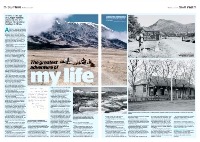
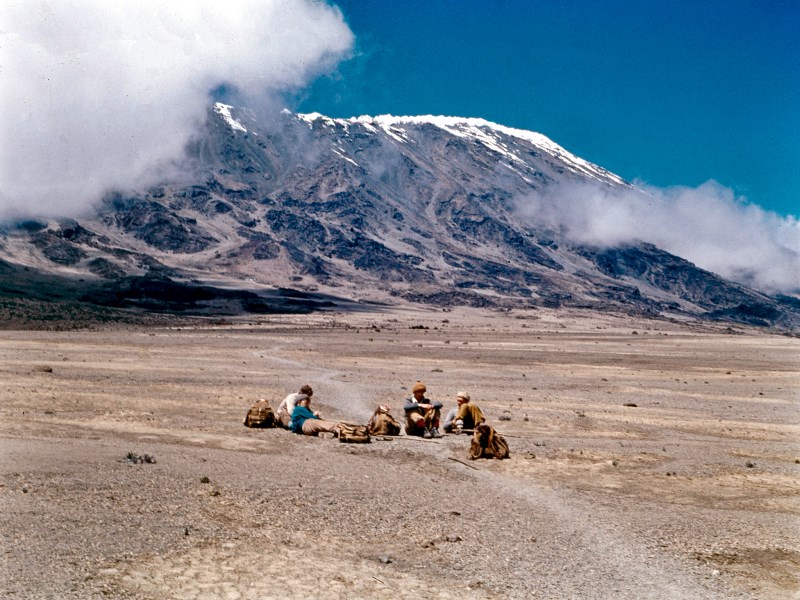
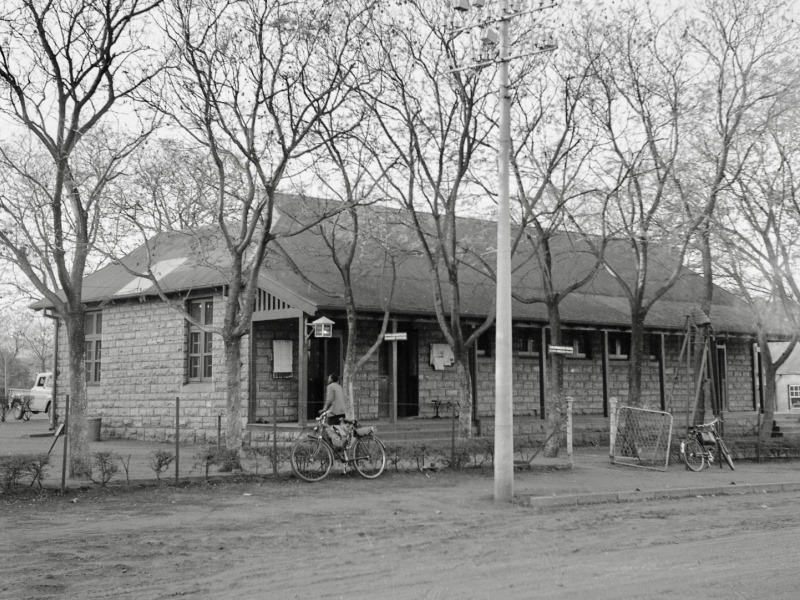
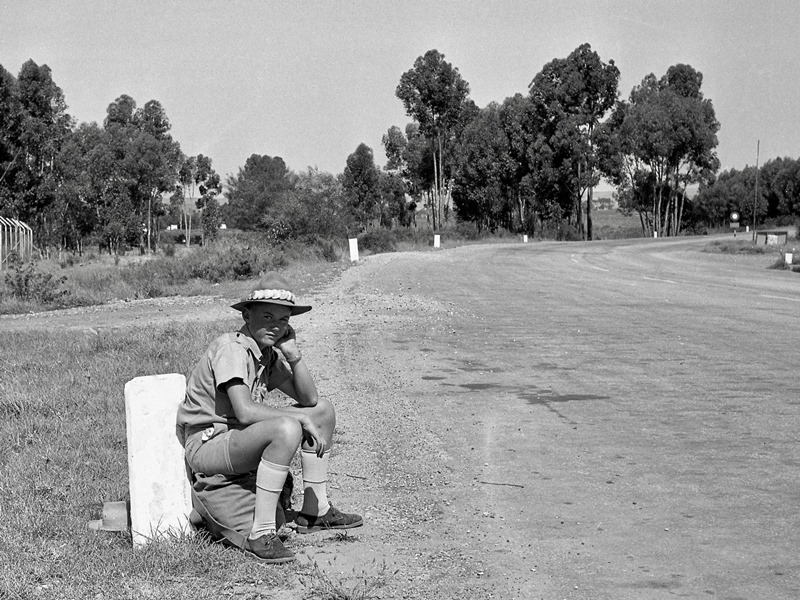
Although we were only 15 years old, Garth and I were taken to the police station after midnight. We were put into a small room and told we could sleep on the floor. We slept fitfully at best, because for the next five hours we were attacked by whining kamikaze mosquitoes. How on earth did I get into this situation? First, it happened a long time ago, and as the opening sentence of L.P. Hartley’s novel, The Go-Between, reminds us, “The past is a foreign country: they do things differently there.” Second, it was far away. It was literally in a foreign country. It was December 1959, and I was on the first of three hitch-hiking holidays that I had in Africa during my mid-teens. The first trip was the longest. It was also one the greatest adventures of my life. Unbelievable as it may seem, as a 15-year-old I hitch-hiked from Johannesburg (the largest city in South Africa) to Moshi (a small town in northern Tanganyika), and back – a total distance of 9,328 kilometres. I could not have gone on any of my three hitch-hiking trips while I was a teenager in Africa without my parents’ approval. They encouraged and supported me. When no one at my high school had parents prepared to let a child of theirs join me on a quest to climb Mt Kilimanjaro, my father found a hitch-hiking partner for me. Garth Hoets and I did not know each other before we joined forces to hitch-hike together, but we got on well and enjoyed each other’s company. We didn’t get into any trouble. Why, then, were we taken to the police station? Well, there were no youth hostels or backpacker lodges in Africa in the 1950s and early 1960s. However, it was widely understood that hitch-hikers were able to be put up in local police stations. As a result, after two agricultural science students had given Garth and me a 15-hour, 866-kilometre ride from Mpika in Northern Rhodesia (which is now Zambia) to Iringa in southern Tanganyika (now Tanzania), they dropped us off at 12:30am at the local police station. As we expected would be the case, we were indeed allowed to spend the night there. We spent the night in the police station’s records room, which had finger-print charts on the wall. It sounds amazing nowadays, but I stayed in police stations on each of the three hitch-hiking trips I went on in Africa during the period 1959-61. I was never once refused accommodation in them. When we reached Moshi, Garth sprang a major surprise. He said he’d never wanted to climb Kilimanjaro. Instead, he was planning to head north to Nairobi to visit an uncle. Fortunately, however, after our night in the Iringa police station, Garth and I had met four other South African high school students who had also reached Iringa. They too were heading north to Mt Kilimanjaro. We teamed up with them, and – because there was then very little traffic in East Africa other than long-distance trucks – the six of us were able to travel together on lorries for the entire 946 kilometres from Iringa to Moshi. After Garth left us in Moshi, I set off with my four new-found friends – Derek, Peter, Rod, and Ted – to climb Africa’s highest mountain.
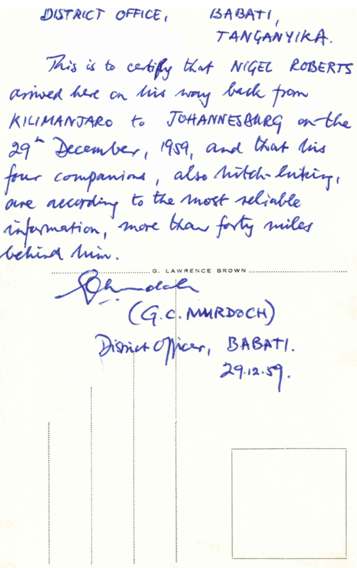
They succeeded; I didn’t. I conked out about a thousand metres short of the summit. (I’m happy to report, though, that I successfully climbed the 5,895-metre-high mountain 26 years later.) In order to return to Johannesburg after the climb, the five of us split into three groups: Derek and Rod; Peter and Ted; and me. I quickly discovered that hitch-hiking on your own had one distinct advantage. Cars that could not accommodate two extra passengers could, on occasion, squeeze in one small 15-year-old. From the get-go, I was ahead of the others. In addition to giving me a lift, he also very kindly fed me and put me up for the night. What is more, he gave me a valued souvenir: a signed postcard stating that my “four companions, also hitch-hiking, are … more than forty miles behind”!
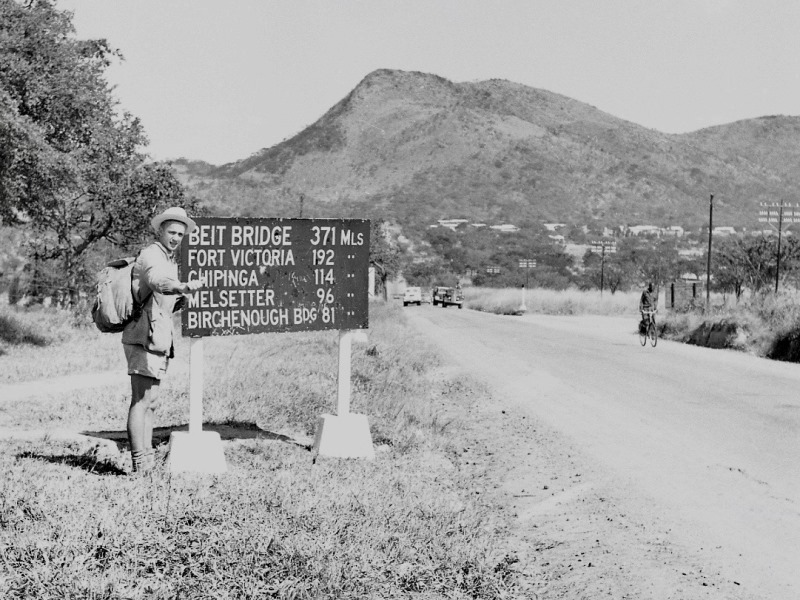
Hitch-hiking on my own enabled me to cover the 4,186 kilometres from Moshi to Johannesburg in just six days! My return journey included the longest single ride in all the hitch-hiking I’ve ever done. On New Year’s Day, 1960, two veterinary-science students squeezed me into their small VW Beetle and, in just two days, drove me 2,538 kilometres from the Tanganyika/Northern Rhodesia border to Potgietersrus (now Mokopane) in South Africa. I was home the next day. My 24-day trip to Kilimanjaro and back had been a life-changing and character-forming experience. During the July 1960 school-holidays, Richard Darley and I hitch-hiked from Johannesburg to Beit Bridge on the South Africa/Southern Rhodesia (now Zimbabwe) border. We then then continued hitching clockwise around Southern Rhodesia.
Highlights included visiting the Victoria Falls, the Kariba Dam, and the Chimanimani mountains. Once again, too, we stayed in a police station. It was in Potgietersrus, which for second successive time was the town in which I spent the final night of a hitch-hiking holiday. In all, Richard and I covered 3,973 kilometres in 15 days.
Six months later, in January 1961, I went on my third and final hitch-hiking holiday in Africa. I am still somewhat more than slightly amazed that my parents let my younger brother hitch-hike with me. Stuart was only 14 years old at the time. On our first day on the road, Stuart and I hitch-hiked from Johannesburg to Kimberley (in order to see its famous “Big Hole”, a former diamond mine).
On day two, we hitched from Kimberley to Belleville, on the outskirts of Cape Town. Our main ride – for 937 kilometres – was in Chevrolet, whose driver also picked up two other hitch-hikers and frequently travelled at more than 160 kilometres per hour. At the end of that very fast ride, the police in Belleville were true to form. As I wrote in my diary, they allowed us to sleep “in an empty room [where] we had a fairly comfortable night.” Stuart’s and my main destinations were two seaside holiday towns – Hermanus and Plettenberg Bay – where we stayed with school- and family-friends. We swam; we fished; we walked; we played cards; and we went to the cinema. To quote Nat King Cole’s well-known song, those really were the “lazy, hazy, crazy days of summer.”
After fourteen days away, during which we had hitched rides totalling 3,750 kilometres, Stuart and I arrived home safe and sound – but only narrowly so. Our last ride was with a careless and occasionally utterly reckless driver. It was the scariest ride of my life. We didn’t know it at the time, of course, but our round-the-Cape hitch-hiking trip turned out to be the last time my younger brother and I enjoyed a seaside vacation in South Africa. I was about to begin my “matric year”, my final year of high school. The following year, I won a scholarship to the United States; and shortly before I left the country, my parents, together with my three younger siblings, also left the country: they migrated to Australia. Not surprisingly, those two factors were an effective thumbs down to any more hitch-hiking holidays in Africa. * * * * * * * * * * * * * * * * * * * * * * * * * * * * * * Nigel Roberts is an emeritus professor of political science at Te Herenga Waka / the Victoria University of Wellington. Detailed illustrated accounts of his three African hitch-hiking holidays can be found on his website (www.nigel-roberts.info). * * * * * This article was published in The Post, Wellington's daily paper, as well as in other newspapers in the Stuff stable, on Monday, June 3, 2024. (The headline The Post gave the article was "The greatest adventure of my life".) * * * * * |
||
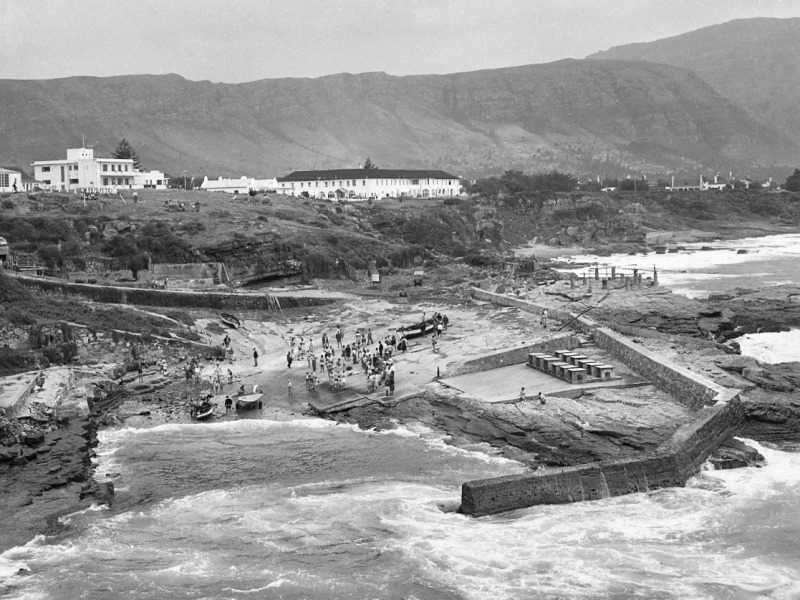 Hermanus was one of two seaside towns where Nigel Roberts and his younger brother stayed with friends during their January 1961 hitch-hiking holiday. This is a photograph of its iconic old harbour.