 |
NIGEL ROBERTS Three-wheeling through Europe |
|
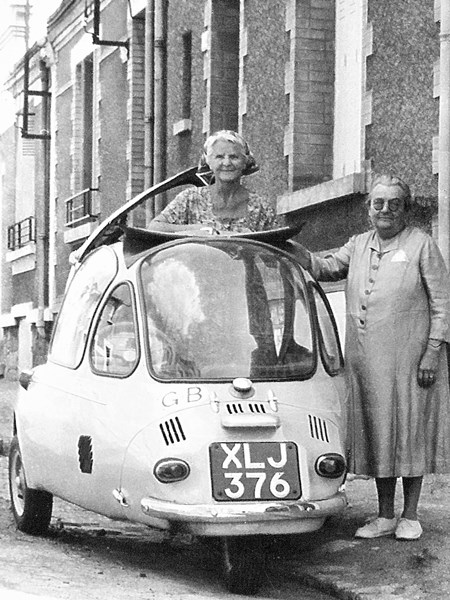
My paternal grandmother was a fan of three-wheel Heinkel bubble-cars. She owned one on several separate occasions, and although my grandmother was sometimes grumpy and grudgeful, she could also be extremely generous.
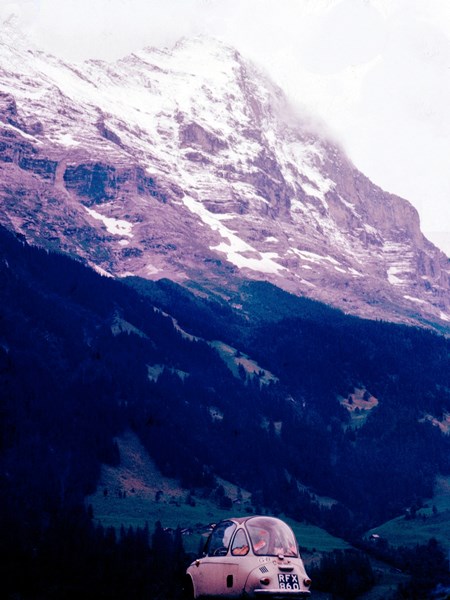
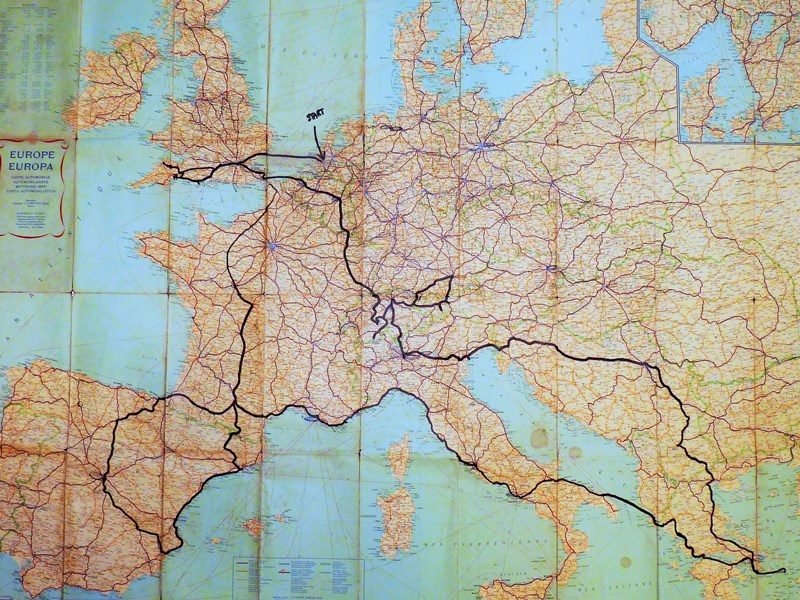
In 1963 I was the beneficiary of her generosity. My grandmother lived in England, but when she was almost 80 years old, she went to work in Australia as a dormitory supervisor in a girls’ boarding school. She left her small house in Dorset empty for several years, with her three-wheel Heinkel locked in the garage. When my grandmother heard that I was going to spend the last half of 1963 based in England, living with my older brother, she said I could use her car. All I had to do was get it roadworthy, re-licenced and insured. I arrived in England on August 2, 1963. I was 19 years old and had just spent a year in the United States. Five days later, I collected my grandmother’s car and took it for what I called “a shakedown cruise”: driving from Dorset to Devon, London, and Kent to visit relatives I’d not seen for 15 years. Then – on Sunday evening, August 18 – I drove my grandmother’s Heinkel onto a cross-channel ferry at the start of a two-month three-wheeling adventure in Europe. The adventure began badly. In my diary I described the trip from Dover to Ostend in four words: “Very rough; very sick.” After driving off the ferry, I made a classic mistake: I drove the wrong way round a roundabout! Thankfully, though, it was the middle of the night, it was raining heavily, and there was no other traffic around. Chastened by my elementary error, I turned into a side street and slept in the car. Things could only get better, I thought. I am happy to say they did. After visiting a friend in Liege (Belgium’s third-largest city), I drove through parts of four countries – Belgium, Luxembourg, France, and Switzerland – in a single day. Driving 515 kilometres in a tiny car was not an especially comfortable experience, and I was really relieved to reach the Swiss capital, Basel, and spend a night in the city’s youth hostel. Switzerland had been my primary goal when I embarked on my European adventure. I had done some climbing in Africa and was entranced by the Eiger and the Matterhorn, possibly the two best-known peaks in the European alps. As a result, the day after arriving in Switzerland, I drove to Grindelwald to see the Eiger’s infamous North Face. It’s almost 1,800 metres high, but a cat can look at a king, and I took a photograph of the bubble-car at the foot of the mountain.
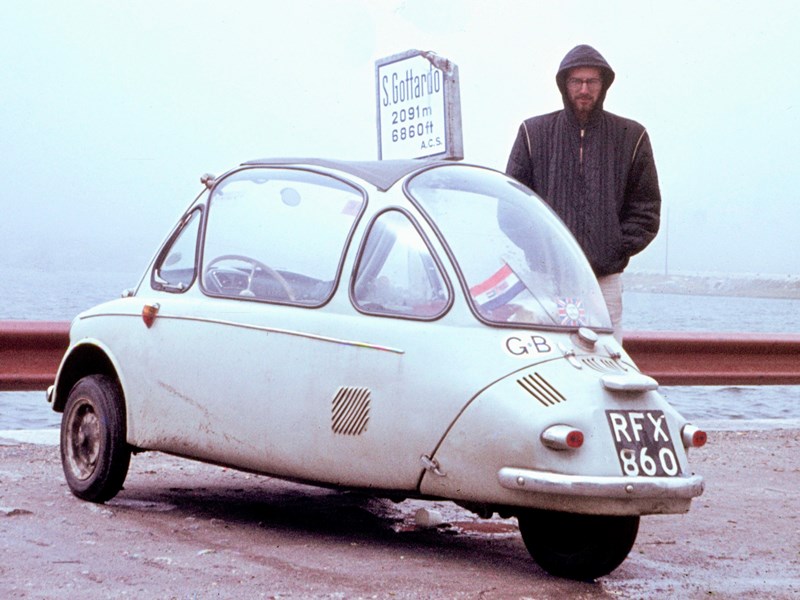
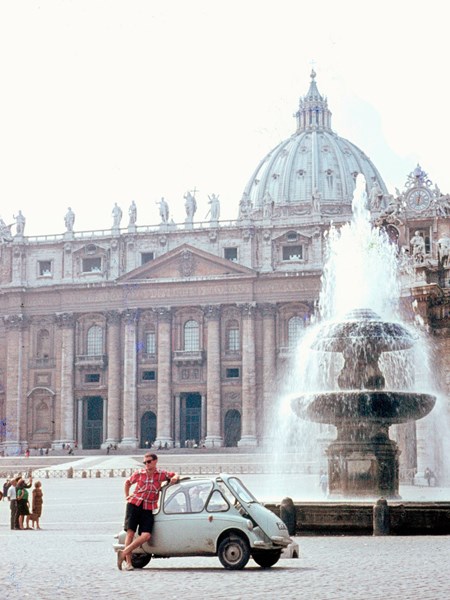
The next day the local guides’ office told me it would cost 180 Swiss francs to climb the Eiger (not via the North Face, I hasten to add). That was way beyond my budget, so I decided to press on to Zermatt, the picture postcard village at the foot of the Matterhorn. The guides’ office there said Yes, I could climb the mountain, but that they didn’t know when, because there is “too much snow on the Matterhorn for climbing now.” While waiting for conditions on the mountain to improve, I spent the next two days going on long hikes in perfect weather. Then clouds began to surround the mountain and when I called in at their office, the guides said my chances of climbing the mountain were diminishing. That same evening, however, three young Americans from Los Angeles arrived at the Zermatt youth hostel. Bill Kilbourn, Dave Prigge, and Gary Wells had flown via Iceland to Belgium, bought an old Citroën deux Chevaux, and set off to see Europe. As they laughed and joked about their experiences, they asked me where I was going next. To Scandinavia, I replied. “We’ve been there,” they said. “It rained.” (It certainly had rained that year: Newsweek called it the “worst Western European summer weather since 1873.”) Where are you going next?, I asked. To Italy, Greece, and Spain, they replied. My response was brief and to the point: I’m coming with you! For the next seven weeks, the four of us travelled together. I was the only insured driver for my grandmother’s car, so Bill, Dave, and Gary each took it in turns – day and day about – to accompany me in the bubble-car, while the other two were in the Citroën. We became skilled at convoy driving. We intuitively worked out that the first rule in a convoy is stop if you lose sight of the vehicle behind you. There were no Google maps in 1963, but we managed to navigate our way round and through cities as large and as busy as Munich, Milan, Belgrade, Athens, and Rome. I documented the trip with at least one photograph of the bubble-car in every country we visited. Two photos I’m especially fond of show my grandmother’s car at what I jokingly call its physical and spiritual highpoints. Respectively, they were at the 2,091 metre-high summit of the St Gotthard Pass in southern Switzerland, and in front of the 136 metre-high St Peter’s Basilica in the Vatican City. (By contrast, the highest road in New Zealand, over the Crown Range, is only 1,121 metres above sea-level; and the Beehive is a mere 72 metres high.)
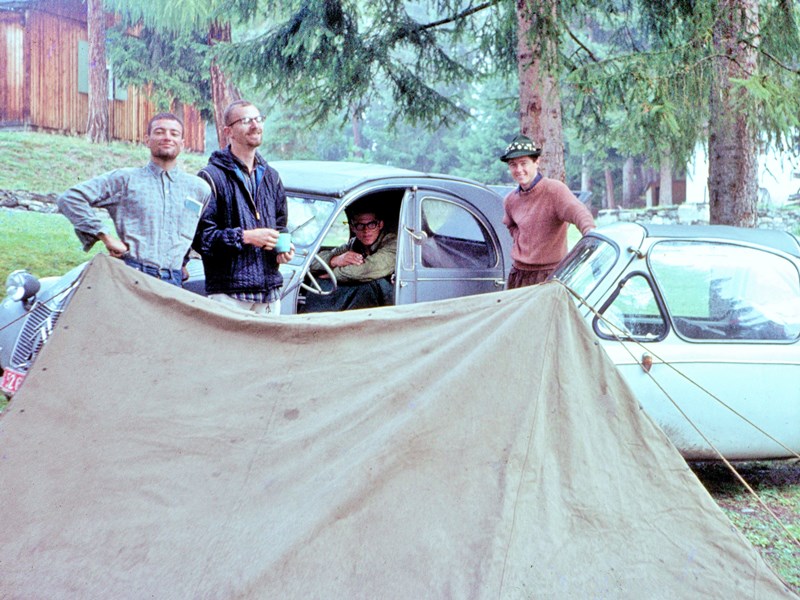
However, only one photograph was taken of the four of us. It was in Austria after we’d spent a wet night outside a youth hostel that was closed. Bill and I had slept in my surplus US army pup-tent, while Dave and Gary had slept on the floor of their car (which had seats that could be removed).
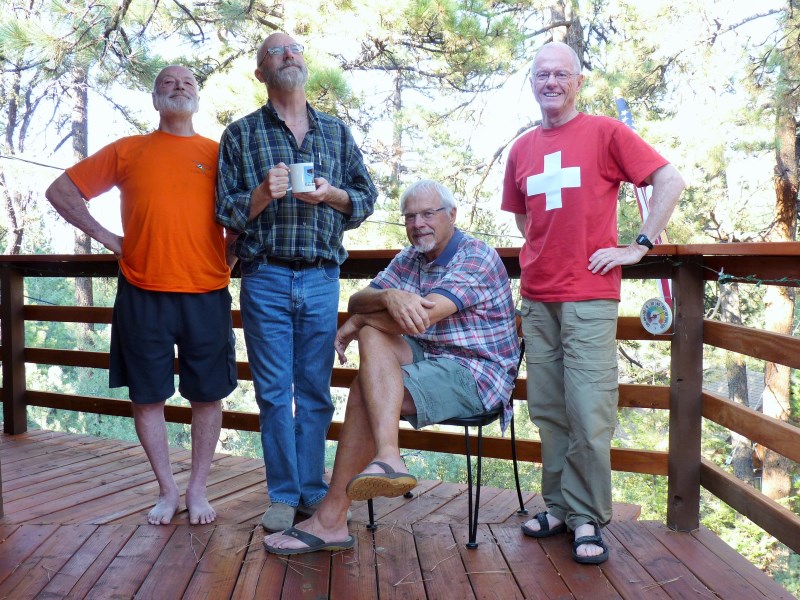
The bubble-car gave me no end of trouble: it used hardly any petrol but drank litres of oil; its accelerator cable broke, and so too did the alternator. The horn fell off and its replacement blew every fuse in the car. As a result, near the end of our odyssey, we garaged the car for a week in Toulouse after filling it with all our additional gear, and the four of us squeezed into the Citroën in order to drive over the Pyrenees and spend a week in Spain. After returning to southern France and collecting the bubble-car, we drove north to Tours, where we were warmly welcomed and put up for the night by Jean and Blanche Rainer, who were my grandmother’s friends. They had first met when my grandmother took my father to France in 1926, and now the Roberts-Rainer family friendship had been extended, as the Bible puts it, “unto the third generation.” Sadly, though, I had to say “au revoir” the following morning, not only to Monsieur and Madame Rainer, but also to Bill, Dave, and Gary. The bubble-car’s two-months’ worth of foreign travel insurance was due to expire in 24 hours’ time. By the time it did, though, I was safely on a ferry heading across the channel from Calais to Dover. When I was back in England, my grandmother wrote to me from Australia asking me to sell the car for her, and – quite amazingly – I was offered £120 for the Heinkel. I was relieved to have the car off my hands. At the same time, I was sad to see it go. I’d had some wonderful adventures in the bubble-car, and I’d also made life-long friends. Eleven years ago, Bill, Dave, Gary, and I held a reunion in California to mark the 50th anniversary of our European tour. One of the things we did was stage a re-enactment of the photo that had been taken of us in Austria half a century earlier.
The four of us, we all agreed, hadn’t aged at all.
* * * * * * * * * * * * * * * * * * * * * * * * * * * * * * Nigel Roberts is an emeritus professor of political science at Te Herenga Waka / the Victoria University of Wellington. Detailed illustrated accounts of his travels can be found on his website (www.nigel-roberts.info). * * * * * This article was published in The Post, Wellington's daily paper, as well as in other newspapers in the Stuff stable, on Monday, July 22, 2024. (The headline The Post gave the article was also "Three-wheeling through Europe".) * * * * * |
||