 |
NIGEL ROBERTS A Purposeful Paupers’ Holiday |
|
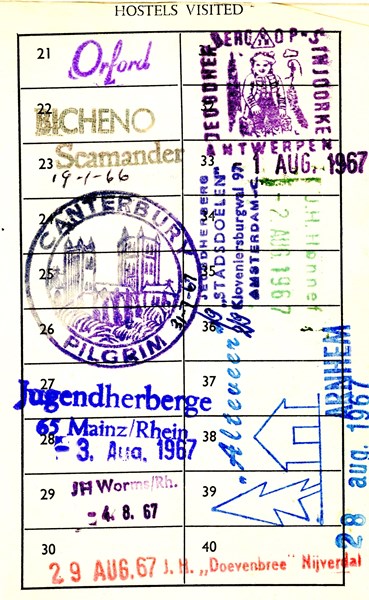
A week after our honeymoon, Heather and I made an impulsive decision. We would leave Australia and go to Britain. We were both heavily over-committed and needed a clean break. Four weeks later we boarded the m.s. Aurelia, and we arrived in the UK in early March 1967. I’m a British citizen, so we could live and work in England. As we were university graduates, we were – and this still amazes and appals me – regarded as qualified teachers even though neither of us had then had any teacher training whatsoever. We quickly found jobs as temporary (or supply) teachers. However, teachers were very poorly paid and – to make matters worse – we also had student loans to repay. We were as poor as proverbial church-mice. We knew we couldn’t afford to go on holiday, so what would we do during the six-week summer break? An article in the London Times on May 29, 1967, provided us with an answer. We could apply to a London-based organisation called International Voluntary Service to go on a workcamp. “Volunteers make their own travel arrangements,” the article said. It pointed out that there was “no pay, but food and accommodation provided.” We could do that, we thought. While we were university students in Australia, both Heather and I had been on workcamps – Heather had worked in Papua New-Guinea, and I’d worked on an Aboriginal reserve in South Australia. We duly applied to go on an international workcamp. Fifty-seven years later, I can still clearly recall how we filled in our application forms. Our first choice was to go to Morocco, and our second choice was Finland. We duly signed our applications, paying scant attention to the ‘we-are-prepared-to-go-anywhere’ clause. Roughly five weeks later, we learnt we’d been accepted to go on a workcamp in Worms, West Germany. John Le Carré famously described Bonn, the country’s capital city, as “A Small Town in Germany” – well, Worms is an even smaller town in Germany. It certainly wasn’t where we thought we’d be spending our summer holidays, but we reasoned at least getting there would be easier and cheaper than it would have been getting to Finland or Morocco. As I had done a lot of hitch-hiking when I was a high-school student in Africa, I persuaded Heather that was how we should travel to and from Worms. When the school year finished, we left our small flat in Surrey and on July 31, 1967, started hitch-hiking. Our first day didn’t go well. Rides were difficult to come by, so we caught a bus to Guildford, where we unsuccessfully hitched for an hour-and-a-half before giving up and catching another bus to Dorking. A series of truck and car rides – interspersed with some lengthy walks (it’s not called hitch-hiking for nothing) – eventually saw us reach Canterbury well after seven in the evening. The cathedral city’s youth hostel was full and we were initially turned away. A few minutes later, however, the manager ran after us as we walked dejectedly down the road. There’d been a couple of cancellations, he told us, and we could have the vacant beds.
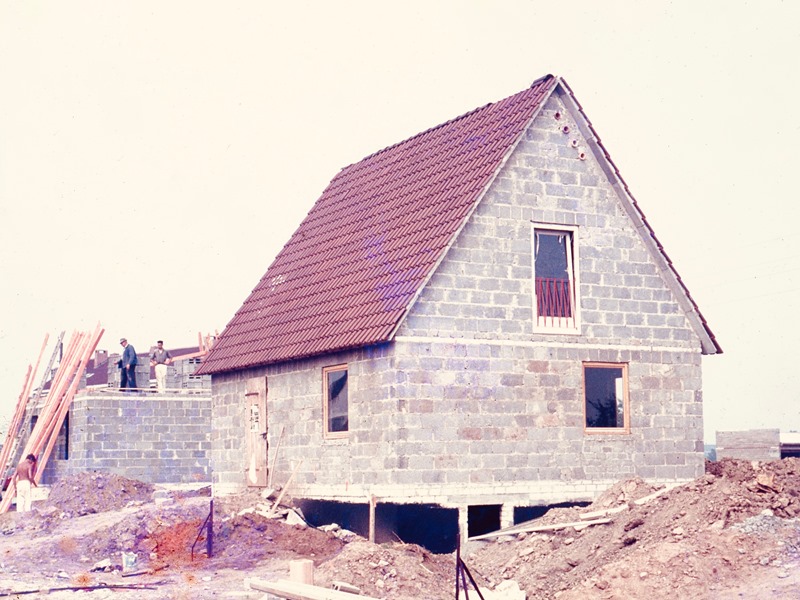
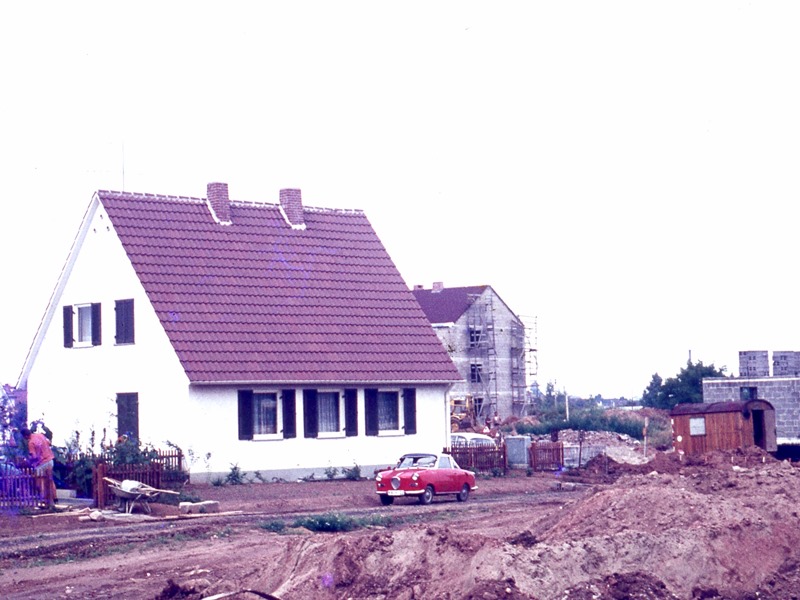
The following day we caught a bus to Dover and then a cross-channel ferry to Ostend, where we began hitch-hiking again. We were first in the queue at the start of the Belgian motorway, so I cursed when two young English women poached our spot, but they were a blessing in disguise. Two cars screamed to a halt to offer them a ride, and one of the drivers picked us up instead and drove us all the way to Antwerp, where Heather and I spent the night in the city’s youth hostel. We spent the next two days slowly making our way across northern Belgium and up the Rhine valley. We were unable to stay in Cologne, half the youth of Europe were in its hostel, but 50 kms further south we were able to squeeze into the Bad Honnef youth hostel: Heather scored a bed while I had to sleep on a mattress on the dining-room floor. Seven lifts the following day took us as far as Mainz. One ride was especially memorable. To protect Heather from unwanted amorous advances, we’d decided that even though her German was far better than mine (she’d studied it at school for three years), I’d sit in the front of any car when that was an option. When one driver – justifiably proud of the area’s magnificent scenery – repeatedly pointed up towards the hills above the Rhine and said, “Schloss … Schloss … Schloss”, it took me roughly a dozen times to work out that he was referring to the castles that lined the route! After five days’ hitch-hiking, we arrived at our destination. We were surprised to find that our workcamp was on a middle-class housing estate – a far cry from the work we’d done in South Australia and New Guinea. However, families that wanted to live on the estate had to contribute cooperatively to its development, and our role as workcampers was to generate hours on behalf of people who because of ill-fortune, such as illness or death, were unable to do their share of the required work.
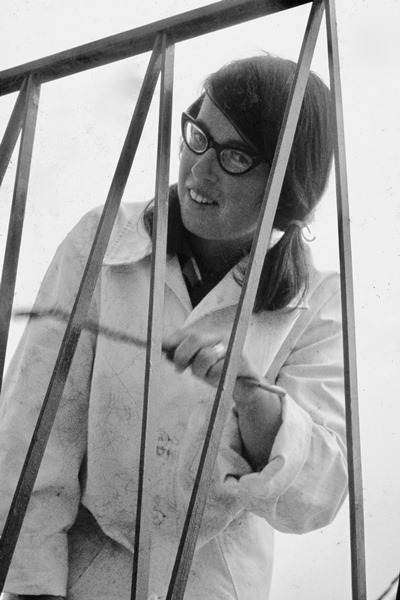
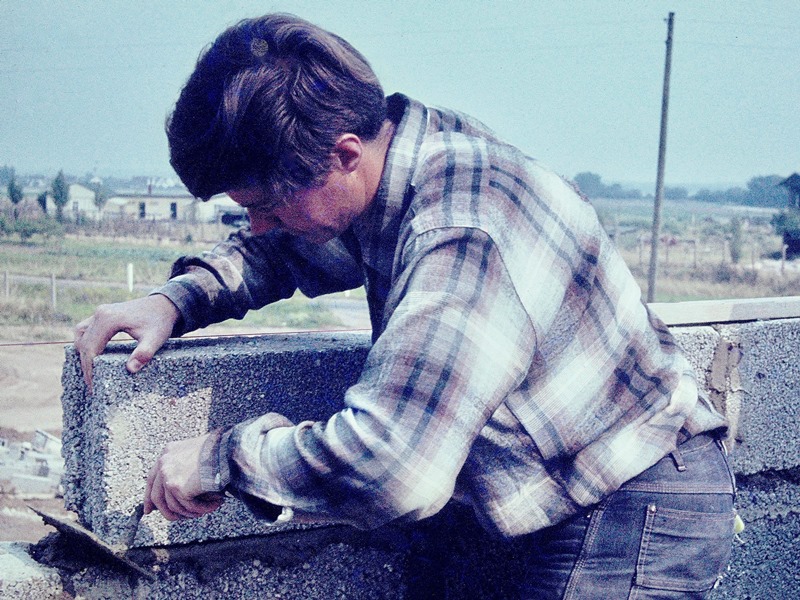
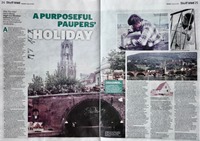
There were 16 of us on the camp: a men’s and a women’s leader (both from Germany), and seven women and seven men from Aruba, Czechoslovakia, Denmark, England, France, Scotland, and (in Heather’s and my case) Australia. We were accommodated – men and women separately – in unfinished houses on the estate. The camp was organised by a German organisation, Aufbauwerk der Jugend. We were told we would work 35 hours a week, and – being Germany – that’s exactly what we did. We rose at 6:00 am, ate “kleines Frühstück” (i.e., small breakfast), and began working at 7:00, but stopped two hours later for Frühstück proper. Back to work for two-and-a-half hours before Mittagessen (lunch), after which we worked for another two-and-a-half hours till 3:30 pm, when we knocked off for the day. We chipped concrete off floors, dug ditches, painted fences, and built garden sheds. Some of the work we did was pointless, such as digging ditches that were later re-done straighter, deeper, and far more quickly by a mechanised ditch-digger. On the other hand, there was also something satisfying about seeing the real and visible progress we made when building the sheds. Our brief careers as manual labourers were even caught on camera for posterity.
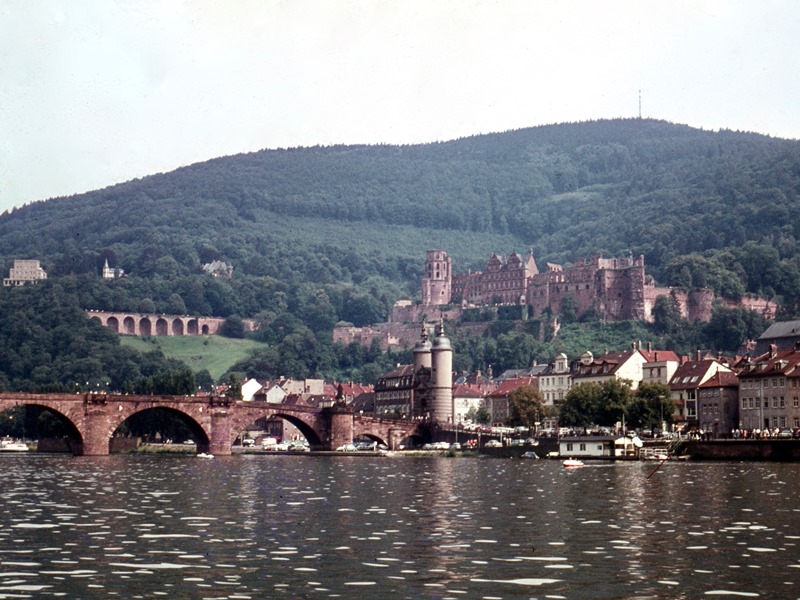
We were taken on a couple of excursions, the most memorable of which was to Heidelberg, the home of the oldest university in Germany. Never in my wildest dreams could I have envisaged I’d return to Heidelberg 27 years later as a political scientist researching the operation of Germany’s MMP electoral system after New Zealand in 1993 voted to adopt something similar.
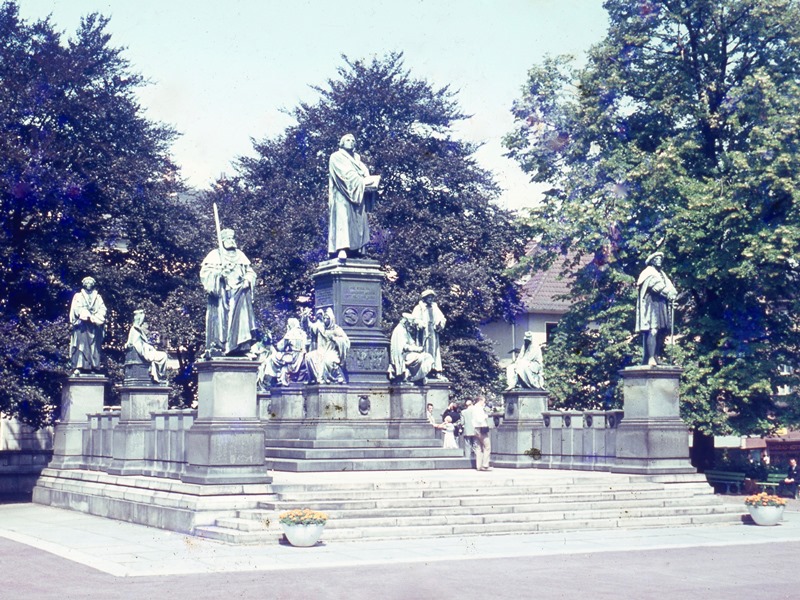
Because the workcamp was on the outskirts of the city, we saw very little of Worms, but Heather and I made a point of visiting the Martin Luther monument, which commemorates the crucial role he played in the Reformation. Luther was summoned to the city in 1521 to appear before an assembly of the Holy Roman Empire – which we now know as the Diet of Worms – where he famously refused to recant his reformist beliefs and memorably declared, “To go against conscience is neither right nor safe.”
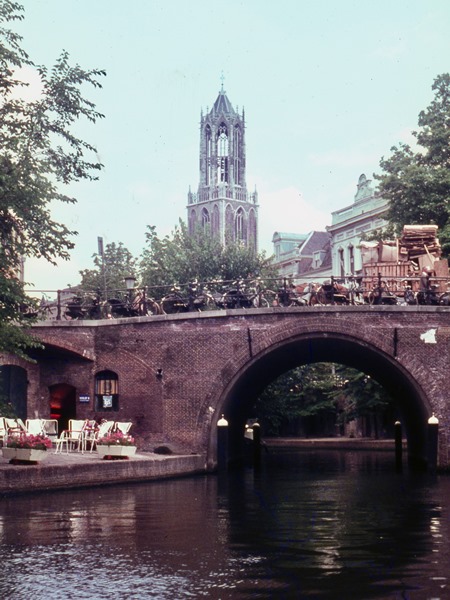
After our three-week workcamp, Heather and I headed for Holland. We failed to hitch a lift on a barge going down the Rhine, so resorted to the road again. Our hitch-hiking was far more successful than it had been on our way to Worms. The day we left the city, for example, we were given a 200 km ride to Rheinbach by a man who also took us to his home where he and his wife fed us and put us up for the night. As a small child, I’d lived in the Netherlands for 18 months when my father taught anaesthesia in Utrecht. I was keen to see old family friends and show Heather some of the places I remembered. We also visited Amsterdam and Rotterdam, but for me the highlight was returning to Utrecht. It’s a beautiful small city, and a boat tour on the city’s canals was a wonderful way to wind down after our purposeful paupers’ holiday.
* * * * * * * * * * * * * * * * * * * * * * * * * * * * * * Nigel Roberts is an emeritus professor of political science at Te Herenga Waka / the Victoria University of Wellington. Detailed illustrated accounts of his travels can be found on his website (www.nigel-roberts.info). * * * * * This article was published in The Post, Wellington's daily paper, as well as in other newspapers in the Stuff stable, on Monday, August 19, 2024. (The headline The Post gave the article was also "A Purposeful Paupers' Holiday".) * * * * * |
||