 |
NIGEL ROBERTS The jolly king of Antarctica |
|
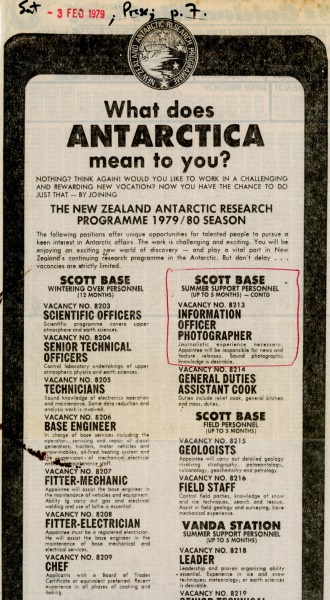
In 1962, when I was 18 years old, I attended a public lecture by Sir Vivian Fuchs about the expedition he’d led (ably assisted by Sir Edmund Hillary) four years earlier that had culminated in the first successful crossing of Antarctica. I was captivated by Fuchs’ photographs of orange snowcats balancing precariously over (and sometimes even partly in) yawning deep blue crevasses. There and then, I knew I wanted to go to Antarctica. The only problem was, How could I get there? Seventeen years later, my wife saw a possible opening for me. On Saturday morning, February 3, 1979, there was an advertisement in the Christchurch “Press” for summer support personnel at Scott Base, including an Information Officer / Photographer. “Journalistic experience necessary”, it said, adding that “sound photographic knowledge is desirable.”
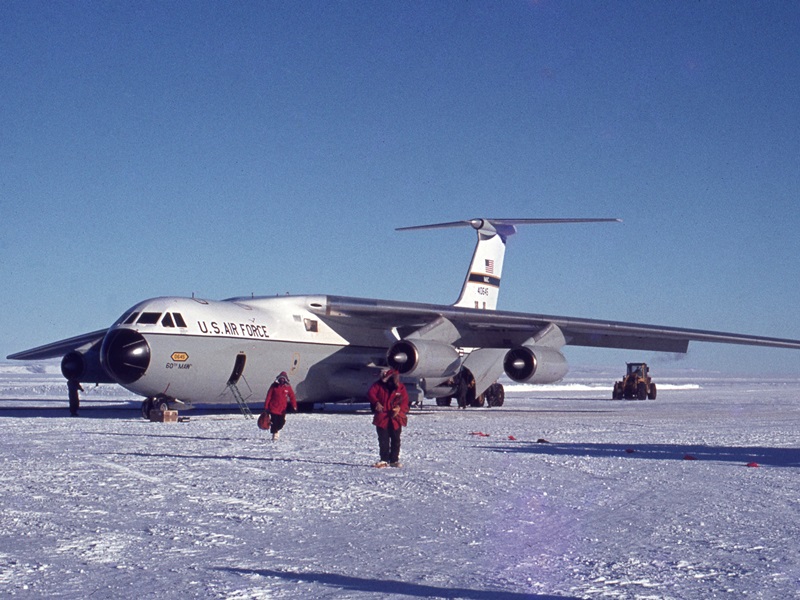
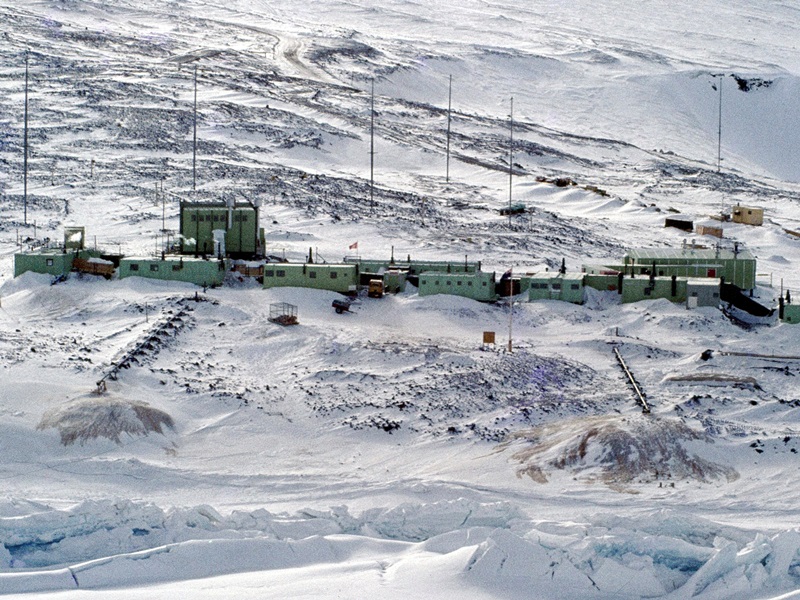
At the time I was a senior lecturer in political science at the University of Canterbury. “I’ll never get the job,” I said. My wife responded with impeccable logic: “Well, you won’t if you don’t apply!” As a result, I applied for the post. I stressed that my first job after leaving school had been on the renowned South African newspaper, the Rand Daily Mail; that I’d won a student journalism prize; that I’d written an array of articles about politics for New Zealand newspapers; and that I’d been an election-night commentator for Radio New Zealand. Little did I know it, though, but the probable clincher was when I wrote, “I am a keen amateur photographer. I have an Olympus OM1 35mm camera and several lenses, a darkroom at home, and I do my own black-and-white work.” I later learnt that the Antarctic Division of the DSIR (now known as Antarctica New Zealand) had two Olympus OM1s for its appointee to use in Antarctica, and that a member of the selection committee had reasoned, “At least we have an applicant who knows one end of a camera from another.” Four months later, on what was appropriately a bitterly cold Christchurch morning, I successfully interviewed for the job. An editorial in the Wellington Evening Post claimed my appointment was “a curious departure from the usual practice of appointing a journalist to this Scott Base post”, but the paper failed to say it was miffed because one of its journalists did not get the job. On October 16, 1979, I flew to Antarctica in a large US Air Force Starlifter. When I stepped out of the plane and onto the sea-ice runway near McMurdo Station and Scott Base (the main American and New Zealand bases in Antarctica), the temperature was minus 22 degrees C. It was also the start of what were – without a shadow of doubt – the most amazing four months of my life.
In Antarctica my role was, primarily, to write articles about aspects of New Zealand’s Antarctic research programme, as well as to take photographs illustrating the stories. The work done by New Zealanders in Antarctica was varied and far-flung, and I frequently had to travel to different sites of scientific interest. For example, only a few days after arriving at Scott Base, I was taken across the ice on the Ross Sea to visit a drilling rig where the Victoria University-led MSSTS project (that is, the McMurdo Sound Sediment and Tectonic Studies project) was attempting to shed light on the climatic and geological history of Antarctica.
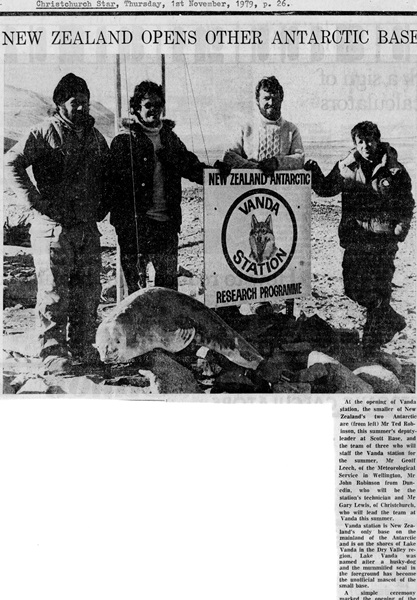
A week later, I accompanied Ted Robinson, the deputy-leader at Scott Base (who – in real life, so to speak – was a policeman in Christchurch), on a helicopter visit to the dry valleys on the mainland of Antarctica in order to cover the official opening of the 1979-80 summer research season at Vanda Station.
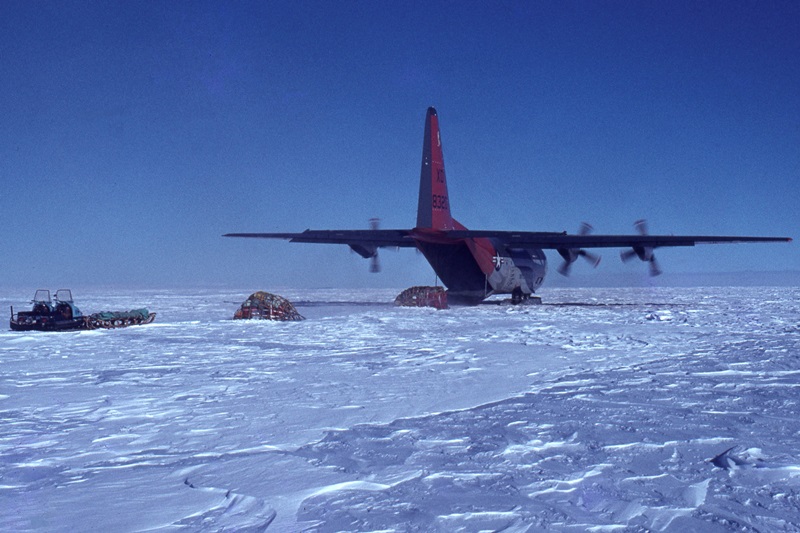
I twice went on a six-hour round-trip on a ski-equipped Hercules to take a four-person “deep field” party from McMurdo Sound to the Ohio Range near the South Pole. The expedition was led by a Christchurch geologist, Margaret Bradshaw, and a Mt Cook National Park ranger, Graeme Ayres. The first time, however, we couldn’t land on the polar plateau: 100 kilometre per hour winds and large crevasses forced our pilot to turn round and head home. Several days later, our second attempt to land near the Ohio Range mountains constituted the most dramatic flying experience of my life. In crystal-clear, windless conditions, the Hercules’ pilot and navigator spotted a possible landing site. Under full power, they guided the plane down onto the snow and flew with the aircraft’s large metal skis on the surface of the snow, prior to heading back up into the sky. They then circled round and inspected the landing site from the air. The “touch and go” had not broken open any crevasses, nor did it reveal any other potential hazards, so the plane then landed safely. The engines of the Hercules were kept going the whole time the research party, two snowmobiles, two large sledges, and four tonnes of equipment and supplies were unloaded. After Graeme Ayres had successfully tested the expedition’s radio, I took a few final photos and climbed back into the plane. Aided by JATO bottles for a “jet assisted take-off”, the Hercules crew and I headed back towards McMurdo, while the research team I’d grown close to and fond of were left on their own as tiny dots in the vastness of the Antarctic wilderness for almost two months.
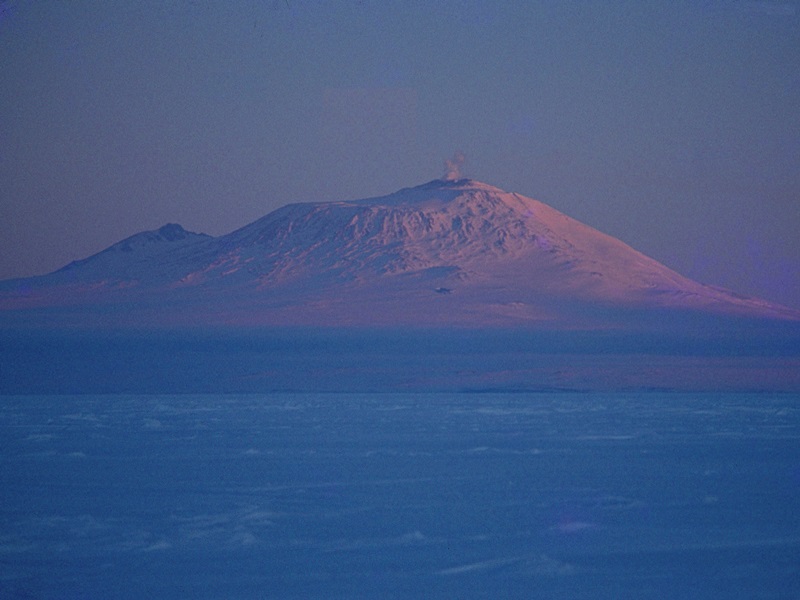
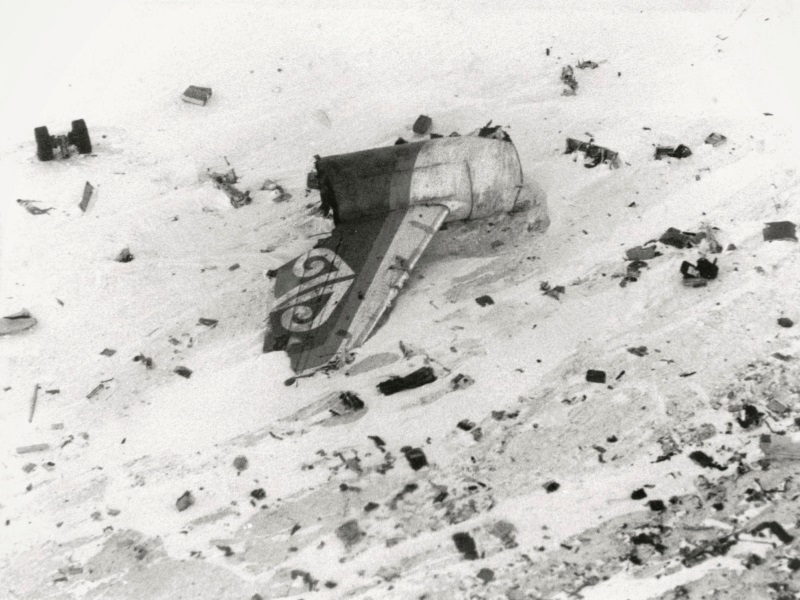
Leaving Scott Base – no matter why, be it for business or pleasure – was often referred to as “going on a jolly”, and because my work meant that I was frequently away on trips, my Scott Base companions began calling me “the jolly king.” Mostly it was good humoured teasing, though sometimes I suspected there was a touch of envy behind the title they gave me. Events took a dramatic turn on November 28, 1979. An Air New Zealand DC-10 with 257 passengers and crew on board disappeared while on a sight-seeing flight to Antarctica. The wreckage of the plane was found on the lower slopes of Mt Erebus, the volcano that’s the dominant physical feature of Ross Island, at about midnight. Eighteen hours later, I was on a helicopter with specific instructions to take photographs of the plane for New Zealand’s – and for the world’s – news media. Back at Scott Base, I went straight to my darkroom to develop the black-and-white films I’d taken of the crash site. As soon as I saw the photograph of the tail of the DC-10, with Air New Zealand’s distinctive koru symbol prominently displayed on it, I knew that it was the picture that would come to symbolise the awful tragedy. I have no doubts it will live on long after my work as a political science professor has been forgotten.
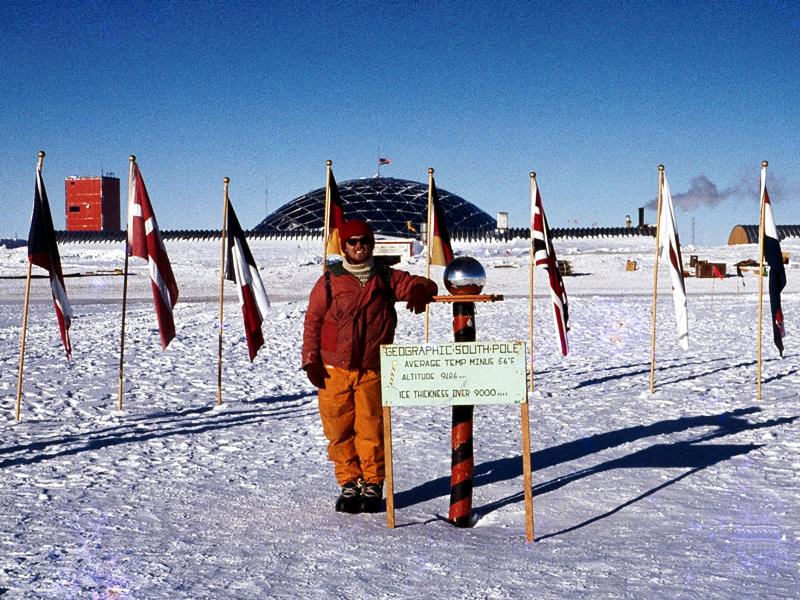
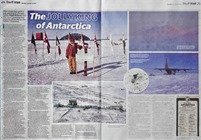
The Erebus crash played a significant role throughout the rest of my time in Antarctica. I photographed and wrote about the memorial service that was held at Scott Base, about the building of a large cross, and about installing the cross on a rocky outcrop near the crash site. Not surprisingly, no-one accused me of going on a jolly in that instance. However, I confess that during my final few days in Antarctica, I did go on one jolly. The summer leader at Scott Base – a wonderful man named Mike Prebble, who became a close friend of mine – knew there was no good reason for me to visit the South Pole. Fortunately, though, Mike had to leave Antarctica to return to work in New Zealand before I did. He was replaced by the winter leader, a jovial scientist called Cass Roper, who had to conduct a gravity survey at the South Pole prior to the onset of winter. Using all my blandishment and flattery skills, I convinced Cass that the New Zealand public really would like to know about his research. As a result, he and I spent six hours at the South Pole on a perfect day in February 1980.
The temperature at the Pole was minus 40, which is the same in both Celsius and Fahrenheit. The cold wasn’t a problem, though, because I have to admit I was exuding the warm glow of a jolly king.
* * * * * * * * * * * * * * * * * * * * * * * * * * * * * * Nigel Roberts is an emeritus professor of political science at Te Herenga Waka / the Victoria University of Wellington. Detailed illustrated accounts of his travels can be found on his website (www.nigel-roberts.info). * * * * * This article was published in The Post, Wellington's daily paper, as well as in other newspapers in the Stuff stable, on Monday, September 16, 2024. (The headline The Post gave the article was also "The Jolly King of Antarctica".) * * * * * |
||