 |
NIGEL ROBERTS Gloriously Unsuccessful: Trekking and Climbing in Nepal |
|
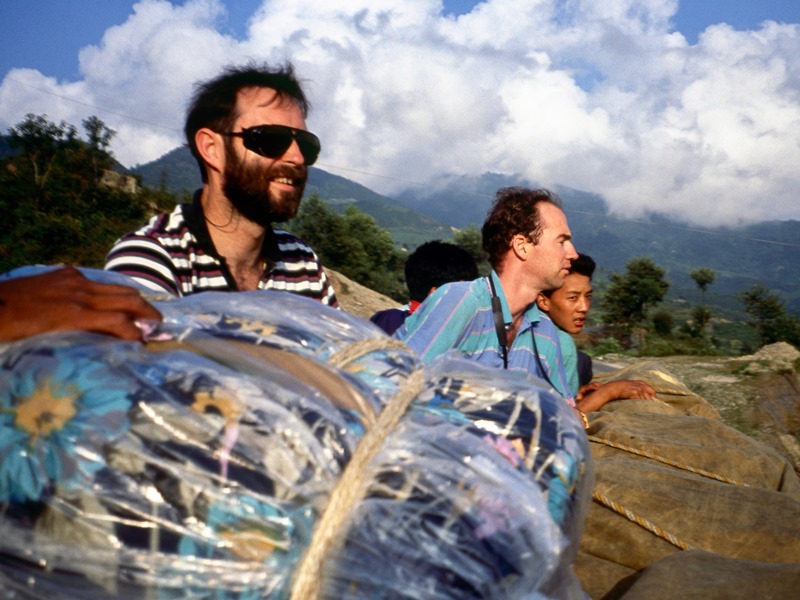
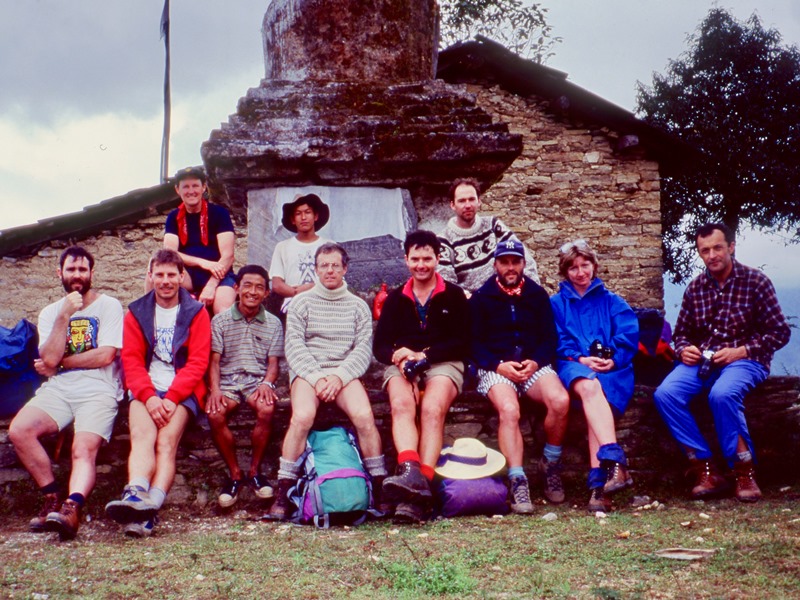
I was nine years old when Edmund Hillary and Tenzing Norgay completed the first successful ascent of Everest, the world’s highest mountain, on May 29, 1953, a mere four days prior to Queen Elizabeth II’s coronation. Later that year my primary school class was taken to the cinema to see a unique double feature: A Queen is Crowned (narrated, incidentally, by a monarch of the stage, Sir Laurence Olivier) and The Conquest of Everest. The following year I was given a book as a present, and 70 years later I am still the proud possessor of Sir John Hunt’s Our Everest adventure: the pictorial history from Kathmandu to the summit. As a result, it’s fair to say I’ve been somewhat obsessed with Mt Everest for nearly 90% of my life. Nearly 40 years after I was initially entranced by Everest, I finally landed an opportunity to go to Nepal. A research visit to Scandinavia included a follow-up trip to Kathmandu, where a Danish colleague – who, like me, is an electoral systems’ expert – had studied the May 1991 Nepalese general election, the first genuinely democratic election in Nepal for more than 30 years. I opted to take annual leave after my meetings at the Tribhuvan University in Kathmandu, and thus joined a trekking and climbing expedition that was going to go from Kathmandu to the Khumbu region to tackle a small peak, Lobuje East, near Mt Everest. I should point out that although the mountain is small by Himalayan standards, its summit is over 6000 metres above sea-level. Lobuje East is well over one-and-a-half times as high as Aoraki / Mt Cook. When the expedition assembled in Kathmandu at the end of September 1991, nine members were paying clients: seven were from Australia and two of us were Kiwis. We were all total strangers; none of us had met before. The Nepalese members on the expedition included Tarchen, the trip leader; Ang Pasang, our sirdar (roughly equivalent to a chief of staff); two assistant Sherpas – Rinzing and Tenzing; and a cook and his assistant. It took us 20 days to reach the foot of Lobuje East. The first day was the easiest, but also, ironically, the most dangerous. We left Kathmandu on a bus and headed east to Jiri. It was only about 120 kilometres away, but breakdowns, steep mountain roads, and frequent stops – including one at a police checkpoint – meant the journey lasted all day. Several of us climbed onto the roof of the bus for the final portion of the ride down into Jiri, blithely unaware of the fact that low telegraph wires across the road would come close to decapitating us. Those who stayed in the bus fared little better: fumes from leaking kerosene tins meant they arrived in Jiri feeling quite nauseous.
We began trekking on October 3, 1991. For the first five days we continued making our way east, each day heading up into the high Himalayan foothills, over 3000-metre passes, and then down into the next river valley. Early on the sixth day we crossed the Dudh Kosi river. At 1493 metres above sea-level, it was literally our expedition’s low point: even Jiri, the starting point for our trek, is at a higher altitude. The Dudh Kosi was also a turning point for us. On the sixth day of our trek, we finally started heading north.
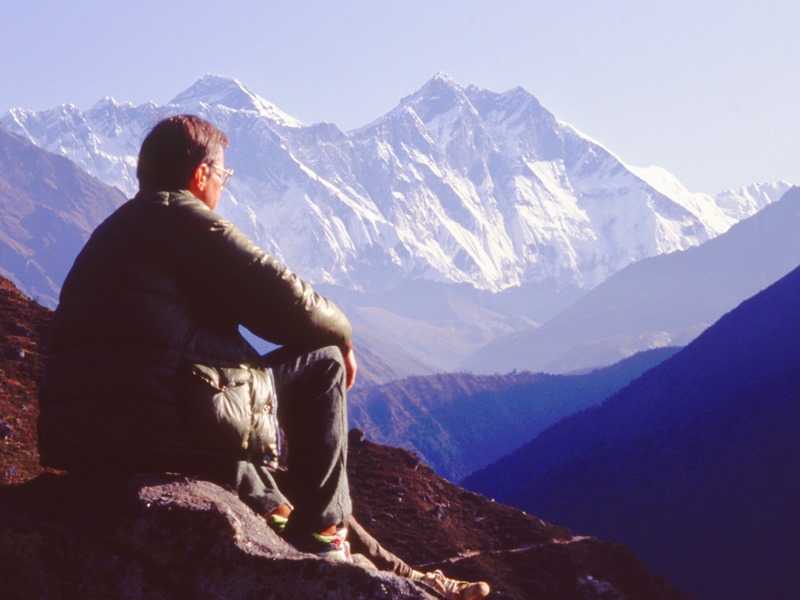
Four days later, we entered the Sagarmatha National Park (Sagarmatha is the Nepali name for Mt Everest) and, later that same day, arrived in Namche Bazar, the capital of the Khumbu region and the gateway to Everest. Ten days’ trekking should have made us fairly fit, but the squalor surrounding some of our campsites, people spitting and coughing along the trail, and the altitude (Namche is almost as high as the summit of Aoraki / Mt Cook) meant we were all distinctly sub-par. Nevertheless, after a dreadful night in a rat-infested lodge, I dragged myself out of my sleeping bag and forced my aching bones and unwilling lungs to hike up above the town, where I was duly rewarded for my efforts by my first magnificent view of Mt Everest. It was just the medicine I needed!
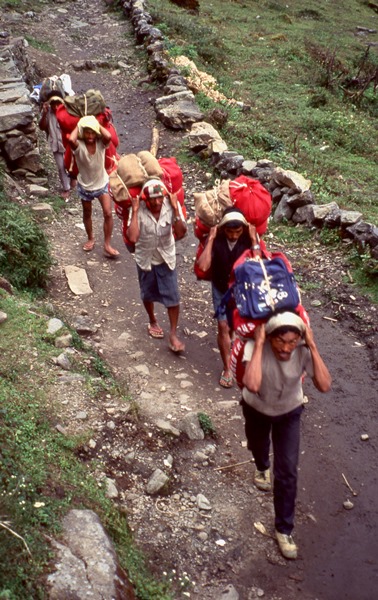
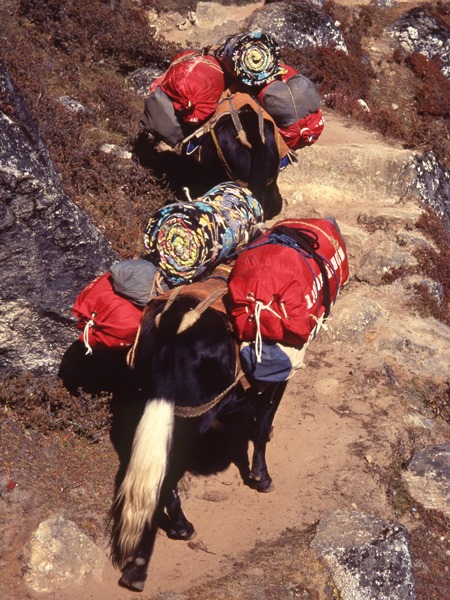
After resting for a day in Namche Bazar, we continued trekking towards Lobuje East – with two crucial differences. First, we were no longer accompanied by a small army of porters. After they’d been paid for their efforts, they went home to Jiri, and our gear was – instead – now carried on the sturdy, solid backs of yaks.
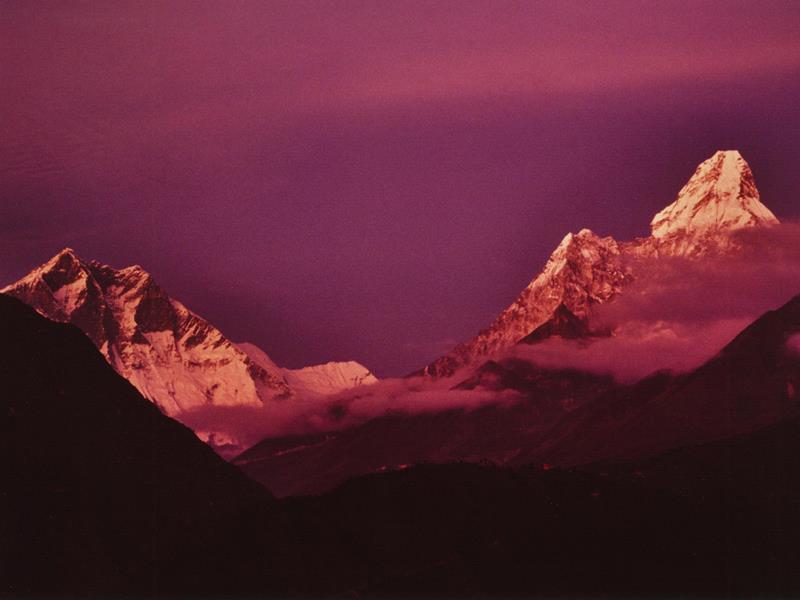
Second, we were surrounded by the most stunning scenery. Some of the world’s highest and best known mountains were our constant companions. For instance, two days after leaving Namche I witnessed the most amazing sunset it has ever been my privilege to see. The red alpenglow colours on and around Lhotse and Ama Dablam were simply unforgettable.
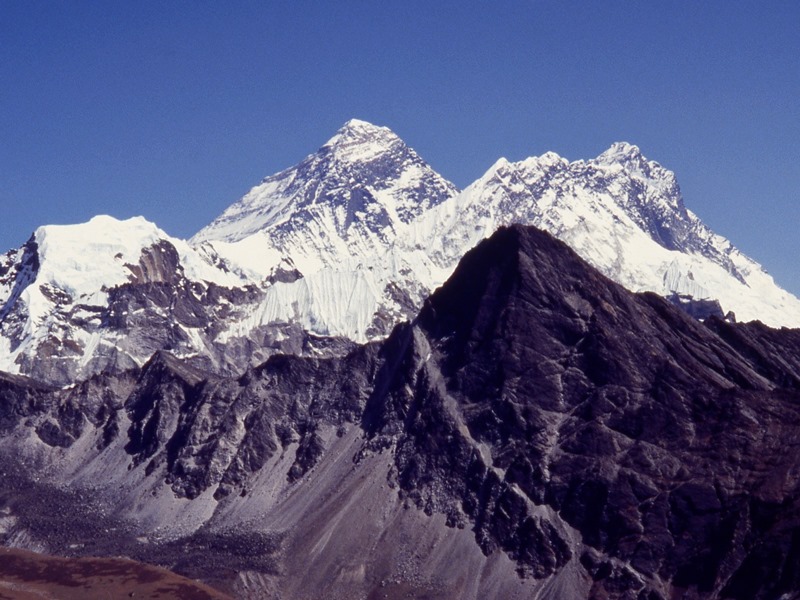
Four days later, we climbed Gokyo Ri, a 5360-metre peak above a valley dotted with a series of small lakes. The 360-degree vista from its summit is one of the world’s truly great panoramas. What is more, the view we had of Everest from Gokyo Ri was outstanding.
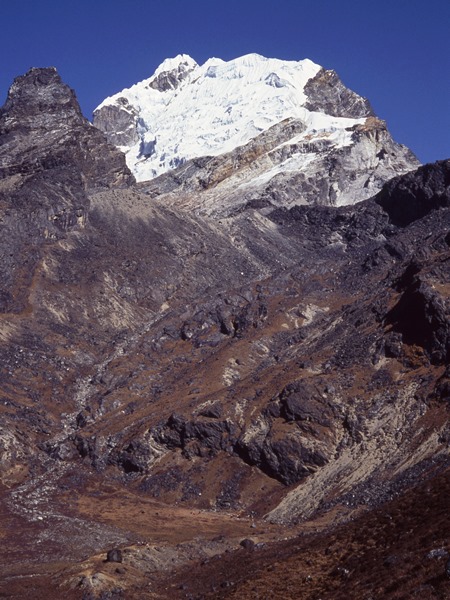
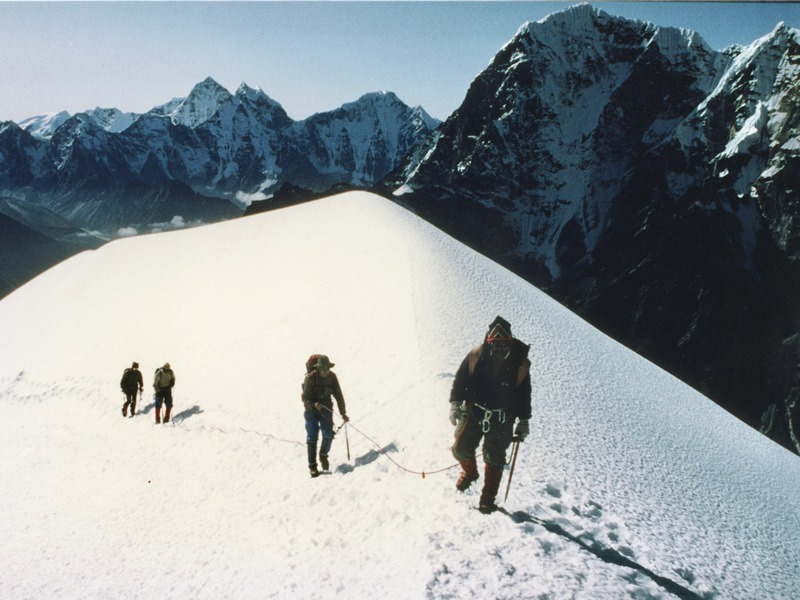
On October 21, we established our base camp in meadows at the foot of Lobuje East. The camp was at 4880 metres above sea-level: a vertical kilometre-and-a-quarter below the summit of the mountain. Two days later, we moved up to advance base camp and the next day tackled the peak in earnest.
We got nowhere near the summit. The expedition’s assistant Sherpas were, frankly, useless: they were totally inexperienced and were unable to help the weaker members of our team. This slowed us all down. Eventually the three of us who were the furthest up the mountain made a decision in conjunction with the expedition leader and sirdar. Standing on a small but safe ledge on the mountain, at a spot that was 5760 metres high (or, to put it another way, 300 metres too low), we opted to call it quits. We knew that getting everyone safely off the mountain was going to be a slow and difficult process. It was, though, our only responsible course of action.
Naturally, we were deeply disappointed. Back at base camp, our mood improved when the cooks unexpectedly produced a cake for one of the members of our party: they had known that our failed summit day was Ralph’s 32nd birthday! The next day we turned south and headed for home via the Thyangboche monastery (which was being rebuilt after a fire had destroyed it three years earlier), Namche Bazar, and Lukla, which was where we caught a death-defying flight back to Kathmandu. Although the expedition members had not known each other when we first met in Kathmandu, we became firm friends during the five weeks we spent in Nepal. To this day – more than 30 years later – we are still close friends. During the early days of the expedition, while we were still heading east before we’d reached the Dudh Kosi river, Geoff (a full-time computer scientist and part-time stand-up comedian) jokingly described us as “the Lobuje legends.” It’s an alliterative phrase we still use (only half in jest) today. The nine of us have held numerous reunions. Five of us went on a mountaineering course run by Alpine Guides, a well-known New Zealand company, because one of the lessons we learnt on Lobuje was that we also needed to improve our mountaineering skills. Crucially, too, two of us teamed up to become climbing partners. Although Eric lives in Canberra, he and I have – since our attempt on Lobuje – climbed more than 20 peaks together in Australia, Europe, North America, and New Zealand. It’s little wonder, then, that the phrase I use most frequently to describe the only time I’ve been to Nepal is “gloriously unsuccessful.”
* * * * * * * * * * * * * * * * * * * * * * * * * * * * * * Nigel Roberts is an emeritus professor of political science at Te Herenga Waka / the Victoria University of Wellington. Detailed illustrated accounts of his travels can be found on his website (www.nigel-roberts.info). * * * * * This article was published in The Post, Wellington's daily paper, as well as in other newspapers in the Stuff stable, on Monday, October 7, 2024. (The headline The Post gave the article was "Gloriously Unsuccessful".) * * * * * |
||