 |
NIGEL ROBERTS Five confessions on the Camino de Santiago |
|
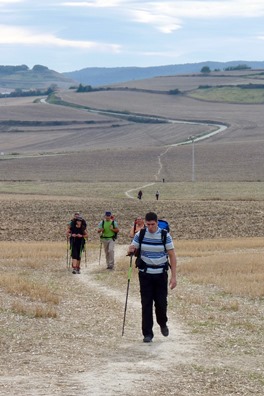
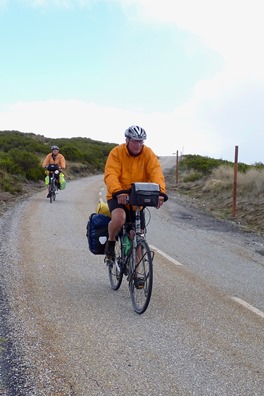
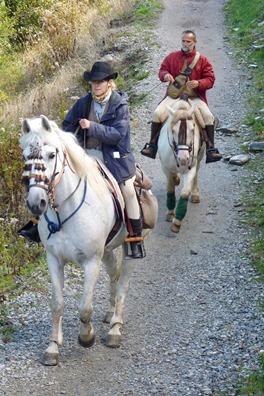
Confession number 1: Walking the Camino de Santiago was not my idea. When I retired from full-time teaching and research, my wife Heather suggested we walk the Camino Francés – the best-known of the many pilgrim routes that lead to Santiago de Compostela, the capital of Galicia in north-western Spain. I was keen to go to Spain for another reason: I wanted to see some of the country’s great architecture, such as Barcelona’s Sagrada Familia, Bilbao’s Guggenheim, and Cordoba’s Mezquita. So we “compromised”: we followed both our dreams. We walked the Camino and we visited many of Spain’s splendid architectural sites. Heather and I had a Spanish guidebook, which informed us that the Camino Francés began in Roncesvalles at the foot of the Pyrenees mountains in the north-eastern corner of Spain. Imagine our surprise, then, when we arrived at the Roncesvalles monastery on September 23, 2010, to check-in at the start of our walk, only to discover that there were hundreds of people there who had already walked for at least a day or two along the Camino de Santiago. “Oh no,” they told us. “The Camino doesn’t start in Roncesvalles; it starts in France – in St Jean Pied de Port – on the other side of the Atlantic Pyrenees.” The truth, as we were to learn during our walk, is that there are many Camino routes across Europe. In the Middle Ages, sinners were instructed by their clergy to repent by going on a pilgrimage to the tomb of St James (i.e., Sant Iago). Because Google maps were somewhat under-developed in those days, you followed a field of stars – that is, a Compostela – in the Milky Way to make your way to Sant Iago’s tomb. People were sent to Santiago de Compostela from across Europe – from what are now Britain, France, Germany, the Netherlands, Poland, Portugal, and of course Spain (to name but a few of the countries where penitents began their pilgrimages). Poor people travelled on foot, and many died on the way. If you had a moderate amount of wealth, you may have ridden on a donkey or horse. If you were really rich, you could pay someone to go on the pilgrimage for you. But no matter where you were from and what your station was in life, for hundreds of years it was true to say that all roads led to Santiago. Recent research has estimated that in the 13th-century as many as half-a-million pilgrims a year – a truly staggering statistic – made their way to Santiago de Compostela. In succeeding centuries, however, plagues, the reformation, and wars all dented the pilgrimage’s popularity. Numbers dwindled to next-to-nothing. But in the late 1980s and early 1990s, interest in the Camino de Santiago slowly began to rise. In the year 2000, slightly more than 50,000 people made the journey; six years later, twice as many did so; and by 2013 the number of pilgrims that made their way to Santiago de Compostela had doubled again. When Heather and I checked in at Roncesvalles, we were asked why we were going to Santiago. Were we religious, spiritual, or cultural peregrinos (pilgrims)? And how were we getting there: a pie (by foot), on a bicycle, or on horseback?
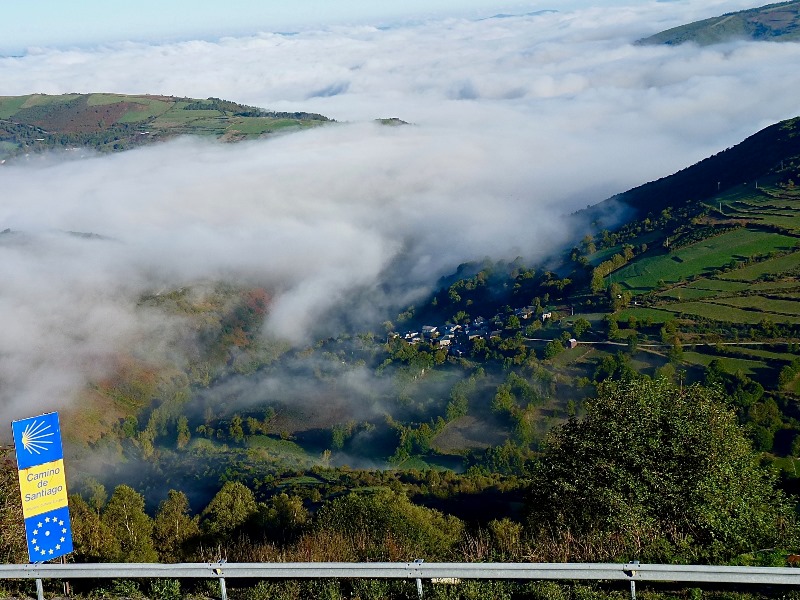
Confession number 2: I’m not religious. However, the cultural option summed up my motives perfectly for walking the Camino, and at 7:45 am on September 24, 2010, we started walking … heading west, one step at a time, towards Santiago de Compostela, which a large road sign informed us was 790 kilometres away. We walked, on average, a half-marathon – somewhat over 20 kms – a day, and a routine for each day’s walk soon emerged.
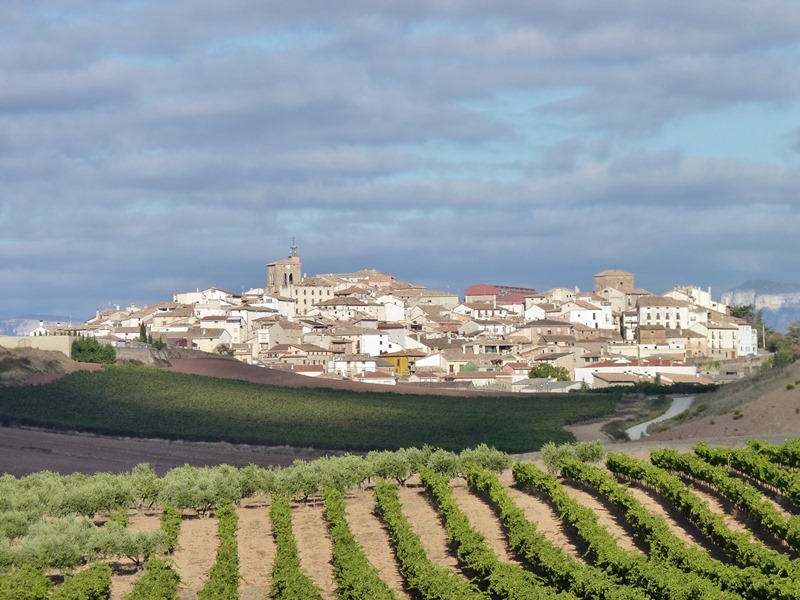
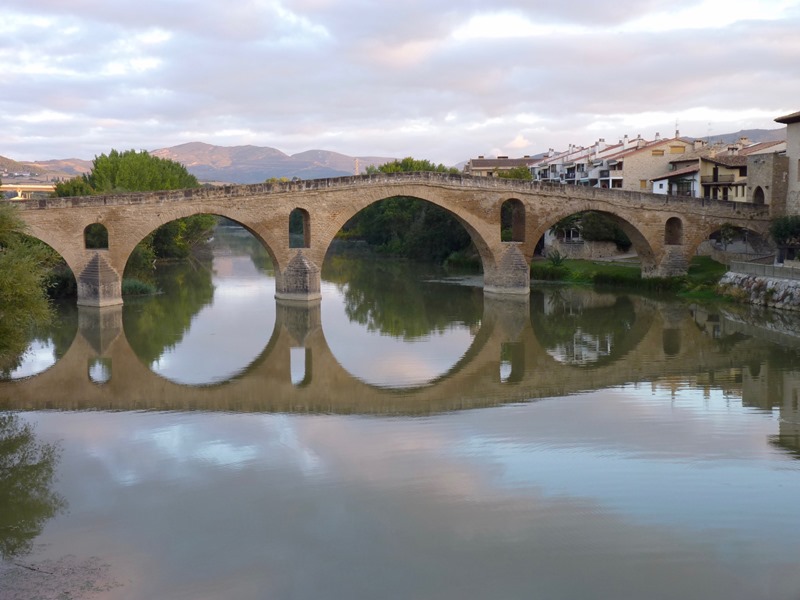
We would invariably get up while it was still dark and set off at dawn. An hour or so later, we’d have breakfast in a small café, then resume walking till it was time for another cup of coffee. After two more hours or so, we’d find somewhere for lunch (which was invariably accompanied by a cold beer). We usually reached our day’s destination by mid-afternoon and had time to find accommodation and wash our clothes before searching for somewhere to have dinner. Cafés and restaurants catered for people without much money who were walking long distances by offering a fixed-price menu del dia (menu of the day). For 9 or 10 euro per person, you could each have a three-course meal plus bread, water, and half-a-bottle of wine. Never have we drunk so much alcohol and yet – because of the exercise we were doing and the heavy packs we were carrying – lost weight! During our first two nights on the Camino, we stayed in inexpensive but decidedly grotty hostels. For our third night, which was in Pamplona, we found a small, reasonably-priced two-star hotel, and that became the pattern we adopted for the walk: after a night or two in either church-run or municipal hostels, we would treat ourselves to something slightly more luxurious. On the Camino we made our way through a wonderful variety of landscapes and scenery: small allotments with half-a-dozen cows; vineyards; vast fields of potatoes; crops of sunflowers; oak forests; tiny villages; small towns (for example, Puente la Reina – the Bridge of the Queen); small cities (such as Logroño and Ponferrada); and large cities (namely, Burgos and Leòn).
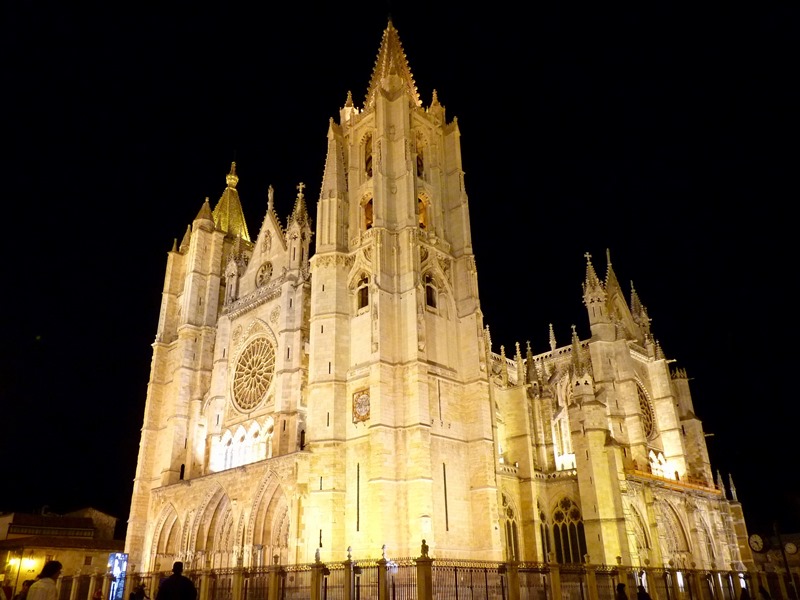
Confession number 3: We did not walk the whole way. But, then, what is the whole way? Well, to get your compostela (an official certificate testifying to the fact that you’ve “done” the Camino) you only need to have walked 100 kms or biked 200 kms. When, after 12 days’ walking, we reached Burgos, Heather and I stopped for a day to see something of the city, especially its massive cathedral. We then caught a bus for 183 kms to León. Its cathedral is stupendous! It is one of the most wonderful churches I’ve ever visited – certainly equal, at least, to Chartres in France and Salisbury in England.
On October 8, we caught a bus to cover the 52 kms from León to Astorga, where – after we’d viewed a bishop’s palace that had (like the Sagrada Familia in Barcelona) been designed by Antonio Gaudi – we started walking again.
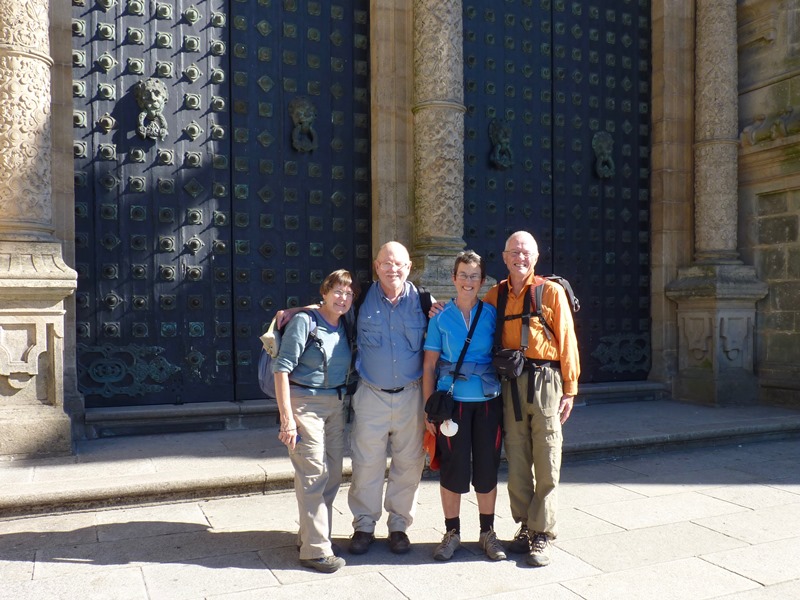
It took us another 12 days to reach Santiago de Compostela. For the last seven days of our trek, we were joined by Bob and Peggy, friends from California. Our routine changed slightly. Because there were now four of us, we rang ahead each day to reserve accommodation at our intended destination. Furthermore, our final five days on the Camino were along the last 100 kms of the route to Santiago and – as a result – the number of pilgrims had skyrocketed, so booking somewhere to stay became next-to-necessary. We reached the outskirts of Santiago at lunchtime on October 19. We found a restaurant and fortified ourselves with tapas and beer before we pushed on through the city’s narrow, noisy streets to its cathedral. After we found it, we did what millions of modern peregrinos have done: we had our photograph taken in front of the Santiago de Compostela cathedral.
The following day we went to the official pilgrims’ office – the Oficina de la Peregrinación – to prove we’d walked at least 100 kms on the Camino by showing them the stamped pages of our Credencial del Peregrino booklets (sometimes called the pilgrims’ passports) and thus get our compostela certificates. We then hotfooted it to the cathedral to attend the noon-time pilgrims’ mass, which was led by the Bishop of Santiago. It was, without a shadow of doubt, the most crowded church service I’ve ever attended. It also marked the official end of our Camino pilgrimage. Confession number 4: Heather was unquestionably right. Walking the Camino de Santiago was a wonderful thing to do. It became so much a part of our lives for four weeks that I literally experienced withdrawal symptoms when we stopped. I dreamt about the Camino for months, and I missed (even yearned for) the simple routines that had governed our everyday activities. Confession number 5: Walking the Camino de Santiago was so interesting and rewarding that seven years later Bob, Peggy, Heather, and I did it again – but not the same Camino. Instead, we walked one of the Portuguese routes, which took us from Porto (the second largest city in Portugal) to Santiago de Compostela. However, that’s both another route and another story. * * * * * * * * * * * * * * * * * * * * * * * * * * * * * * Nigel Roberts is an emeritus professor of political science at Te Herenga Waka / the Victoria University of Wellington. Detailed illustrated accounts of his travels can be found on his website (www.nigel-roberts.info). * * * * * This article was published in The Post, Wellington's daily paper, as well as in other newspapers in the Stuff stable, on Monday, December 2, 2024. (The headline The Post gave the article was "Confessions of the Camino".) * * * * * |
||