 |
NIGEL ROBERTS Exploring at eighty |
|
As a political scientist, I have an abiding interest in parliamentary architecture – so much so that I have visited and photographed more than a hundred legislatures and parliaments. However, there was one I’d not seen but really wanted to: for years I wistfully mused that if I were allowed to visit just one more parliament, it would be Hungary’s. Last year I turned 80 and decided I would give myself a birthday present. I would go to Budapest. I was already thinking about visiting friends and relatives in the USA, Britain, and Sweden, so I reasoned I could return home to New Zealand via Hungary. As a result, I started to do some serious planning. I soon decided to throw Istanbul into the mix. Friends had often sung its praises as one of the most attractive cities in the world. Then, when I discovered that getting from Stockholm to Budapest on my round-the-world ticket would involve a change of planes in Warsaw, I opted for a stop-over in Poland as well. This meant I would be visiting three countries I’d not been to before. Despite a degree of underlying nervousness, I decided to plan my own itinerary. No tour company, I reckoned, would cater for interests as quirky as mine. To simplify matters, I chose hotels close to the city centres: this meant I could get from the airports to where I would be staying in Warsaw and Budapest via public transport and a short walk. To aid the latter, I had only a day-pack and a very small wheeled-suitcase. I’d never before travelled so lightly, and it was definitely worthwhile doing so. I prepaid my hotels, all of which crucially included breakfasts in their fare. From long experience I have found that starting a day’s serious sightseeing on a full stomach is the only way to go. Before I went to Poland and Türkiye, I also spent hours on the internet researching and booking a day-long excursion in each country. I paid careful attention to the itineraries they offered and to their online reviews, and I am pleased (and relieved) to say I chose wisely. I flew into Warsaw’s Chopin international airport on a Saturday afternoon in September and caught a train to the city centre. After a less than 15-minute walk from the station to my hotel, I checked in and then immediately headed back to the station: I wanted to be quite sure I wouldn’t get lost in the dark when I made my way to the station the next morning to catch the 05:24 train to Kraków. After a three-hour train trip across the flat, heavily-farmed plains of southern Poland, I spent only an hour-and-a-half in the city – having a quick look at Kraków’s medieval walls and large market square – before ten other people and I headed off in a 12-seater coach towards the main focus of our 19-hour excursion. Poland has had a long and often tragic history – no more so than when Nazi Germany invaded Poland on September 1, 1939, and triggered the start of the Second World War. Less than a year later Poland’s conquerors established a concentration camp in Oswiecim, and in 1941 the Third Reich extended the camp into a nearby village called Brzezinka.
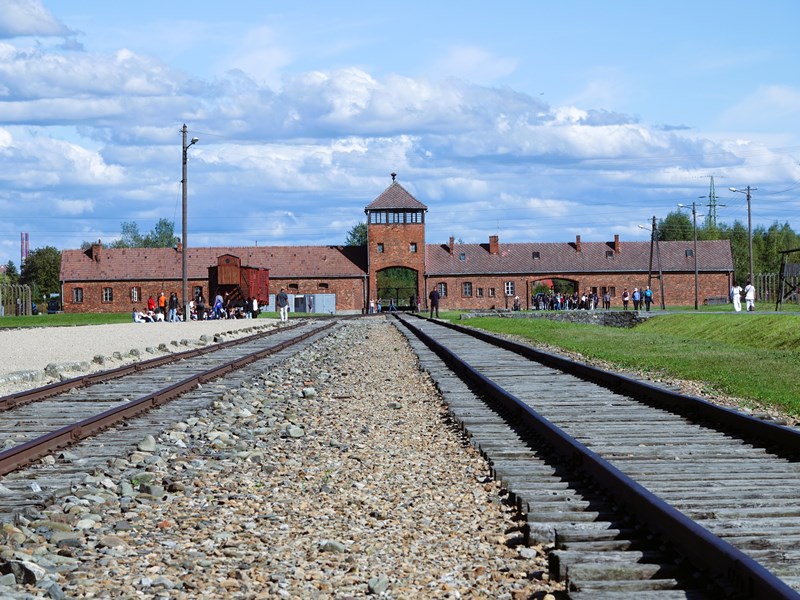
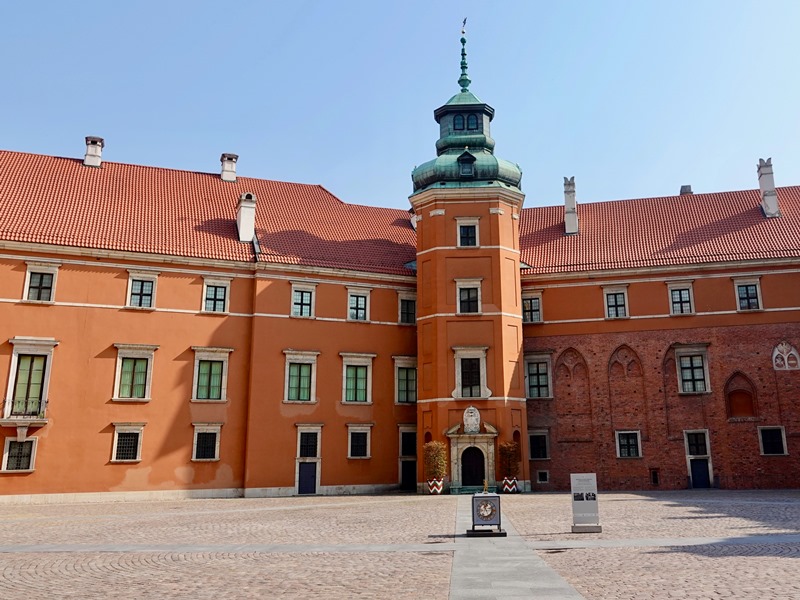
The Germans changed the names of the towns to Auschwitz and Birkenau respectively. That is how they’ll be forever known, because the whole complex was the largest and, without a shadow of doubt, the most notorious of the Nazi death camps: more than a million people were killed in Auschwitz-Birkenau. Walking through the gates to Auschwitz with their wrought-iron inscription, “Arbeit Macht Frei” (Work Makes You Free), and seeing the railway lines that took cattle-trucks full of prisoners to the gas chambers in Birkenau, are chilling and deeply moving warnings about humankind’s potential for depravity. What made the visit even more striking for me was the fact that it was during my lifetime that thousands of people were being slaughtered in these killing factories on a daily basis simply because of their religion, nationality, sexuality, or political opinions. Back in Warsaw the following morning, I was able to visit the Polish parliament (thanks to help from a Polish political scientist and an MP), and then in the afternoon went to the Warsaw uprising museum. For two months – August and September 1944 – the citizens of Warsaw participated in an armed revolt against their German overlords. The father of a Victoria University colleague was one of the many young men who waged a guerrilla-style battle in the ruins and sewers of the city. Out-gunned, out-numbered, and largely unsupported by the Allies, the insurgents surrendered in early October, but their cry for freedom continued to resonate throughout the country for the next 45 years while Poland was subjugated by the Soviet Union. On my third and final day in Poland I explored Warsaw’s old town, which was carefully reconstructed – brick by brick – after it had been destroyed during the Second World War. Restoring the royal palace and other buildings in the city was a popular project, supported by donations from people left with little after the war. It was a nationalistic expression of Polish pride, and was duly rewarded with UNESCO world heritage status.
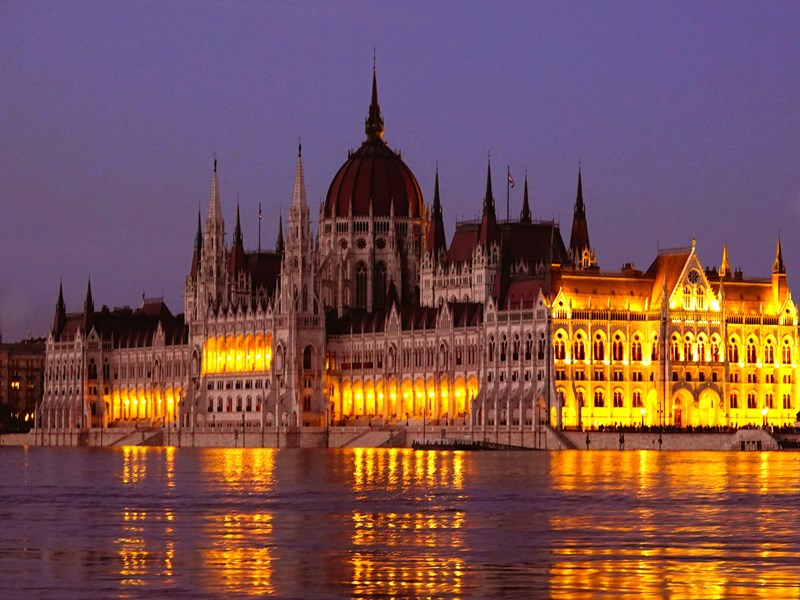
When I flew into Budapest’s airport, I was intrigued to find that – like Warsaw’s airport – it too is named after an internationally renowned composer, namely Franz (whose first name in Hungarian is Ferenc) Liszt. Maybe we should do the same in New Zealand. I like the idea of the Douglas Lilburn international airport for Wellington, and what about the Marlon Williams airport for Christchurch and the Lorde airport for Auckland? The first of my two days in Budapest was devoted to seeing, touring, and photographing the Hungarian parliament. Designed by architect Imre Steindl (who was inspired in part by the Palace of Westminster), the building was first used in 1902 – which was, ironically, very near the end of the Austro-Hungarian Empire’s existence. Nevertheless, it’s a magnificent building, and it claims to be “the 10th most popular landmark in the world and the 5th most popular in Europe.” Situated on the banks of the Danube river, the parliament is a superbly stunning sight, especially when floodlit at night.
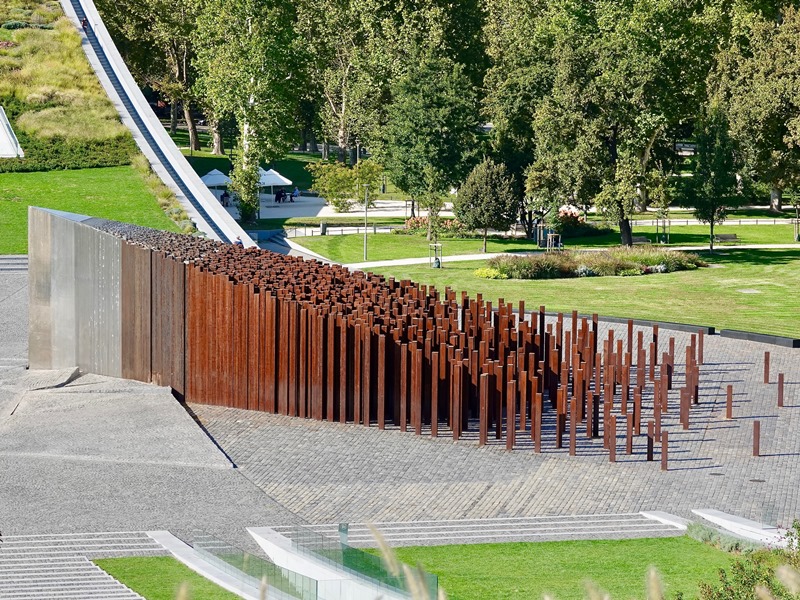
Day 2 in Budapest included visits to the Dohány synagogue, the largest in Europe and the second-largest in the world, and St Stephen’s basilica, which was named after the founder and first king of Hungary. Both buildings are impressive reminders of the rich history and culture of Hungary. Equally fascinating (especially to a political scientist) was the striking memorial I trekked for miles to see in a park on the outskirts of the city centre.
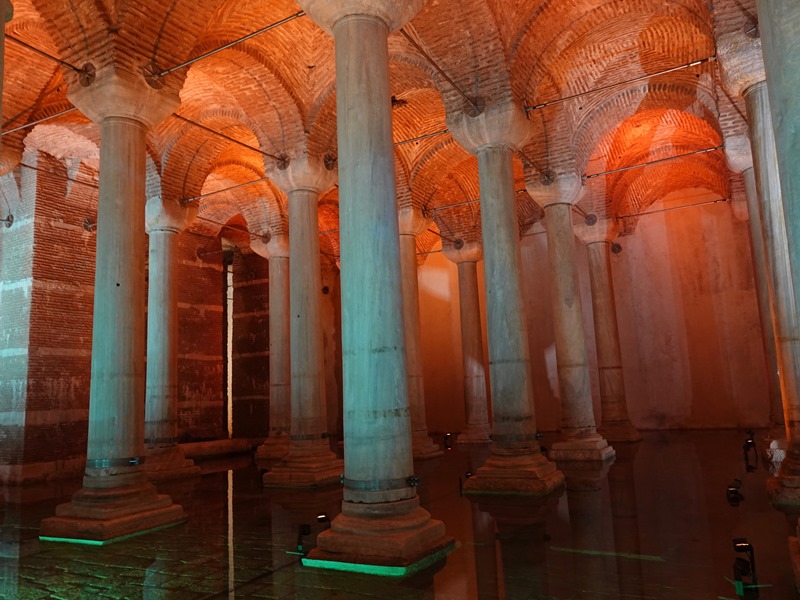
Occupying the spot where a massive statue of Stalin was destroyed on the first night of the abortive 1956 Hungarian uprising against Soviet domination, a wedge-shaped phalanx of metal and rusting steel columns symbolise the students who marched arm in arm protesting against the communist regime. Three days in Türkiye completed my quick Cook’s tour. I spent two days in Istanbul, marvelling at the dramatic reminders of the fact that it is where east meets west. The Basilica Cistern – a large underground chamber with vaulted brick ceilings supported by huge stone pillars – was used for storing water for the city.
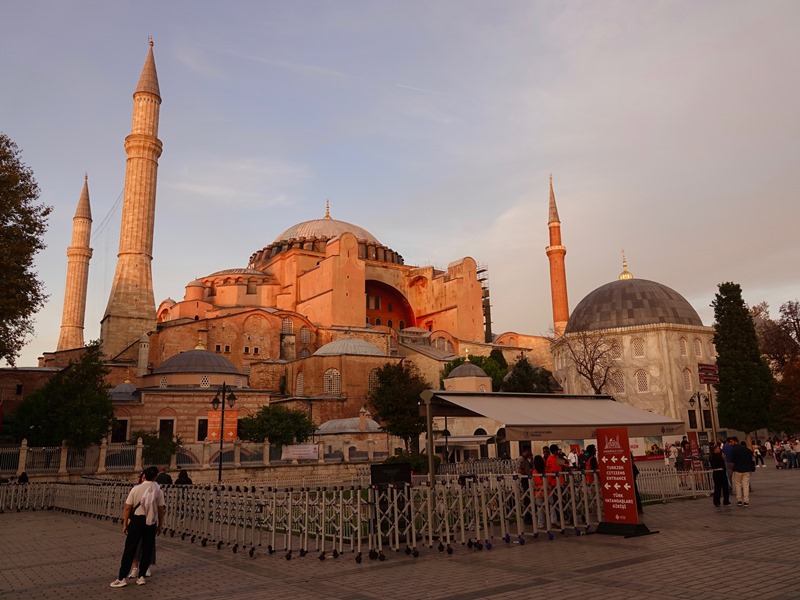
It was built during the 6th century by the Roman emperor Justinian, as was the Hagia Sophia (the Church of Divine Wisdom), which reflects Türkiye’s changing fortunes. It was converted to a mosque by Sultan Mehmet II (Mehmet the Conqueror) in 1453, declared a museum by Atatürk in 1935, and reconverted into a working mosque in 2020.
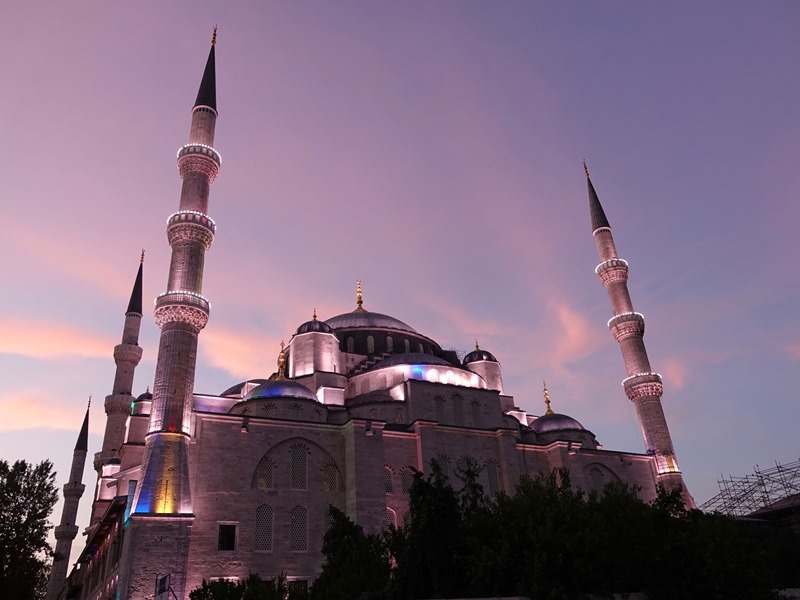
Another mosque, the Blue Mosque, has been described as “one of the most magnificent structures of the Ottoman empire.” Sultan Ahmed I (1590-1617) ordered the mosque to be built, and it has justifiably been called “Istanbul’s most photogenic building.”
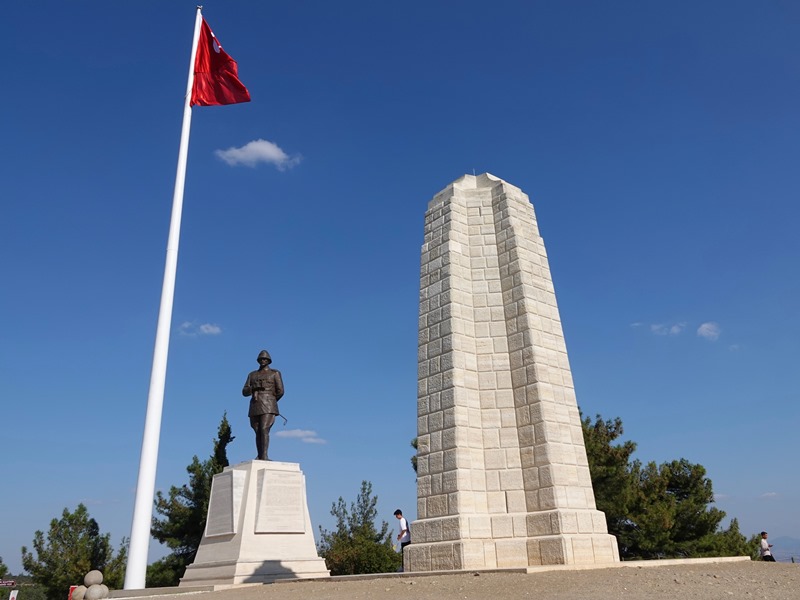
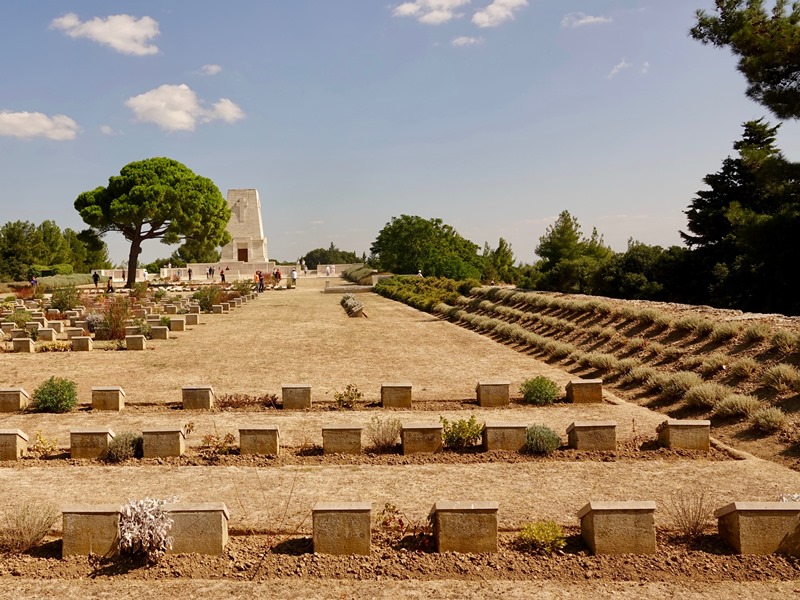
It was in Türkiye that I went on the second day-long excursion of my elderly person’s expedition to three new countries. I went to Gallipoli. It was one of the best day-trips I’ve ever been on. Seeing the stony beaches where the Anzacs had landed 109 years earlier and the steep sandstone cliff and canyons above them gave me a fresh insight into the insurmountable difficulties faced by the young, enthusiastic, but inexperienced Australian and New Zealand troops. The memorials and cemeteries at Gallipoli were hauntingly attractive. The main New Zealand memorial atop Chunuk Bair, the hilltop captured and held for two nights by Kiwi and British soldiers, is somewhat overshadowed by Turkish flags and a large statue of Mustafa Kemal Atatürk, who led the troops that retook the strategic heights and who went on to become the founding father of modern Türkiye.
As a result, the main Australian cemetery, Lone Pine, made a greater impression on me. Not only is it a more attractive site, but I was also deeply moved when a member of our tour group found his great-uncle’s name on the marble walls of the war memorial. Private S. Meekan of the Auckland Infantry Regiment was killed on Sunday, April 25, 1915. He was just 22 years old. The inscription on a stone altar-like structure in front of the Lone Pine memorial summed up the entire experience of visiting Gallipoli for me: “Their name liveth for evermore.”
After three very full days, I left Türkiye at 2:00 am on the first leg of my homeward journey. The whole trip – visiting three new countries in ten days – had gone flawlessly. Nothing went wrong. I did everything I set out to do … and more (such as, quite by chance, photographing Viktor Orbán, Hungary’s prime minister, inspecting flooded streets in Budapest). Above all, I proved to myself that I could still go exploring and have independent adventures even though I’m now an OBE (i.e., Over Bloody Eighty). * * * * * * * * * * * * * * * * * * * * * * * * * * * * * * Nigel Roberts is an emeritus professor of political science at Te Herenga Waka / the Victoria University of Wellington. Detailed illustrated accounts of his travels can be found on his website (www.nigel-roberts.info). * * * * * This article was published in The Post, Wellington's daily paper, as well as in other newspapers in the Stuff stable, on Monday, May 26, 2025. (The headline The Post gave the article was "Still Exploring at 80".) * * * * * |
||