 |
NIGEL ROBERTS Jewels in America’s crown |
|
On September 10, 2017, I successfully climbed Mt Marcy (1629m), the highest mountain in New York state. In doing so, I became the first resident of the southern hemisphere to have climbed the highest point in each of the 50 states of the USA. It was an adventure that took me more than 20 years and included 13 visits to the United States and 18 separate road trips which involved driving over 42000km (more than around the circumference of the earth). My highpointing odyssey took me to some amazing places in the United States. Some – such as the Grand Canyon and Yellowstone National Park – I may well have visited even if I hadn’t been on a climbing trip, but many were places about which I knew little or nothing. Either I found myself driving through or near them or I heard about them from others. People enthusiastically shared their recommendations with me. Shortly after I ascended Taum Sauk Mountain (540m), the highest point in Missouri, I met three hikers. When they heard I was heading for the ‘Deep South’ – Alabama, Mississippi, and Louisiana – they told me to take the Natchez Trace Parkway. I’d never heard of it, but soon found out that it’s a 715km highway from Natchez, Mississippi, to Nashville, Tennessee.
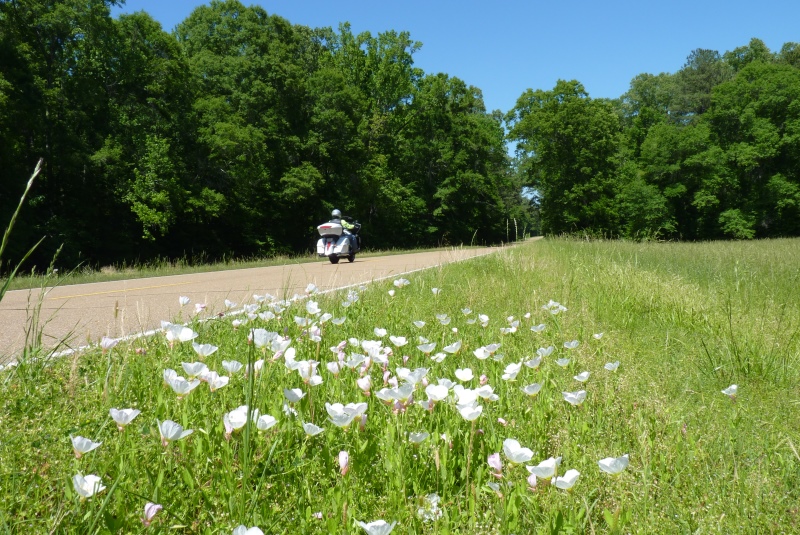
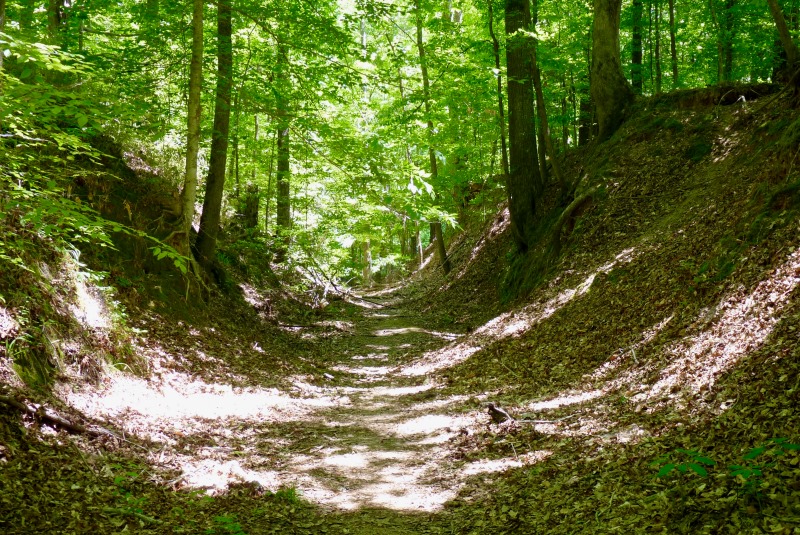
Unlike most highways, however, it’s part of the US National Parks’ system. Commercial traffic is prohibited from using the road, and the maximum speed limit is 80 kilometres per hour. There are no shops, motels, or gas stations on the road; there are no traffic lights or overhead wires. Simply put, driving along the parkway is a delightful experience. It’s also a designated cycle-way. As its name implies, parts of the parkway are alongside the Natchez Trace, which is a centuries-old route that was used by native American Indians, colonial traders, and other travellers. More than 220 years ago, President Thomas Jefferson declared the Trace a national road for delivering mail, and as a result – to quote from a National Park Service pamphlet – “where the ground was relatively soft, walkers, riders, and wagons wore down sunken sections.”
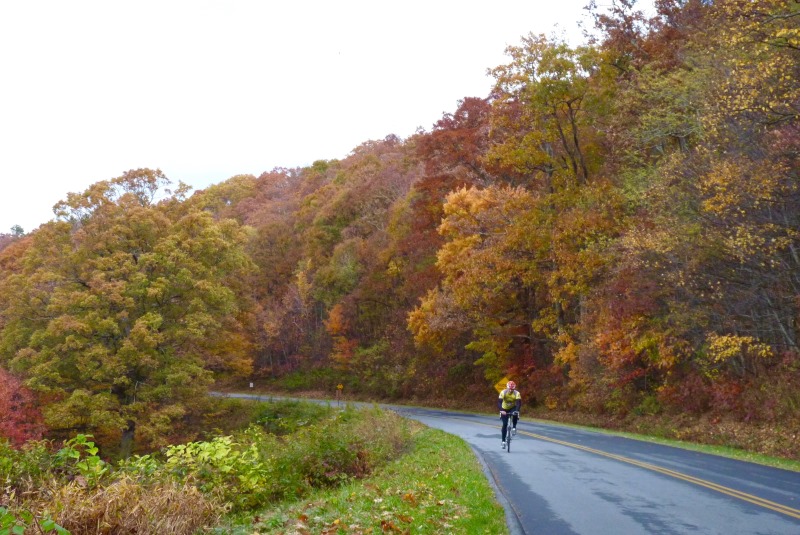
In brief, the Natchez Trace Parkway is an unsung jewel in America’s crown, as is another (somewhat better known) highway, the Blue Ridge Parkway. It’s a 755km-long linear park linking the Shenandoah National Park in Virginia with North Carolina’s Great Smoky Mountains National Park. After climbing Mt Mitchell (2037m), which is not only the highest peak in North Carolina but is also the highest mountain in the United States east of the Mississippi River, I was privileged to drive 183km through stunning autumn foliage along the Blue Ridge Parkway while I made my way towards Tennessee.
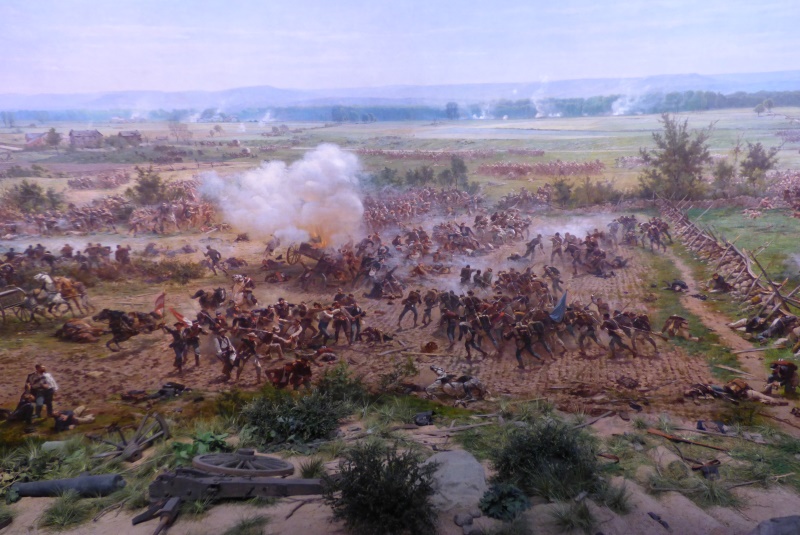
On another climbing trip, while I was on my way to Mt Davis (979m), the highest point in Pennsylvania, I made a slight detour to spend nearly a full day visiting Gettysburg. It’s the site of possibly the best-known battle of the American civil war. In July 1863, the Union (or northern) armies defeated their southern Confederate foes.
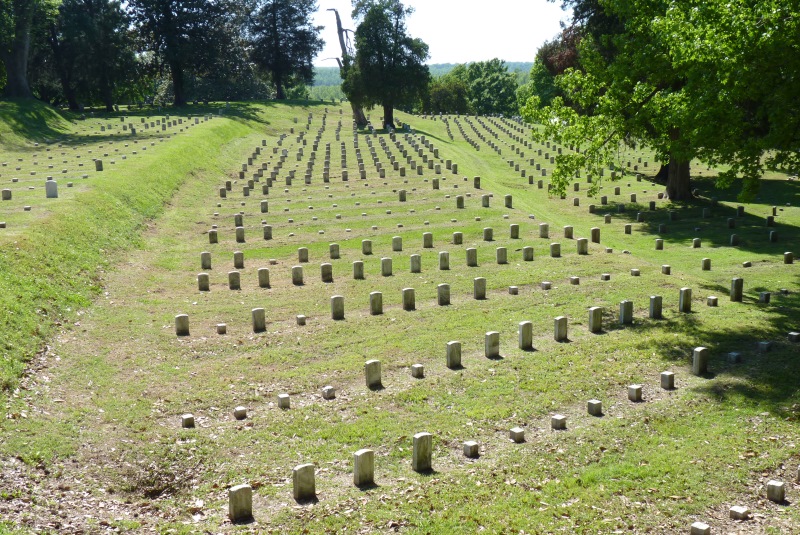
Four-and-a-half months later, President Abraham Lincoln attended the ceremonies dedicating the battlefield’s cemetery. His short speech (a mere 272 words long) has moved me to tears ever since I first saw it more than 60 years ago on the walls of the Lincoln Memorial in Washington DC. Lincoln said “… we cannot dedicate, we cannot consecrate, we cannot hallow this ground. The brave men, living and dead, who struggled here have consecrated it, far above our poor power to add or detract.” Instead, Lincoln argued, “It is for us the living, rather, to be dedicated here to the unfinished work which they who fought here have thus far so nobly advanced … that this nation, under God, shall have a new birth of freedom, and that government of the people, by the people, for the people, shall not perish from the earth.” Coincidentally, the day after the battle at Gettysburg ended, another crucial event in the history of the American civil war occurred at the opposite end of the country. The Confederate armies at Vicksburg – the last southern stronghold on the Mississippi River – surrendered after a 47-day siege. The tide of the war had truly turned. As a result, after visiting Woodall Mountain, an utterly unprepossessing 246m pimple that’s the highest peak in Mississippi, my final port-of-call in the state was Vicksburg. More than 1600 soldiers were killed during the siege. Six thousand or so people were wounded, and nearly 30000 southerners were captured. Seeing row upon row of graves on slopes above the Mississippi was a sombre and sobering sight.
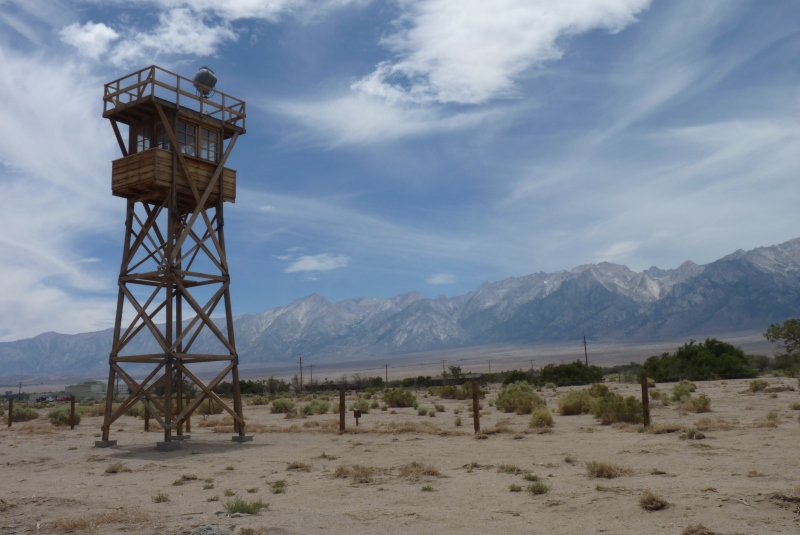
While Eric Hodge, my Canberra-based climbing partner, and I were driving between two state highpoints – from Nevada’s Boundary Peak (4006m) to California’s Mt Whitney (4419m) – we passed a National Historic Landmark called Manzanar. “This site,” we learnt, “possesses national significance in commemorating the history of the United States of America.” Why? Manzanar – a bleak and barren spot on the eastern, rain-shadow side of the Sierra Nevada mountains – is one of ten sites where a total of over a hundred thousand American citizens and residents of Japanese origin were interned during the Second World War. It was an action that has been widely condemned as a “shameful chapter” in US history.
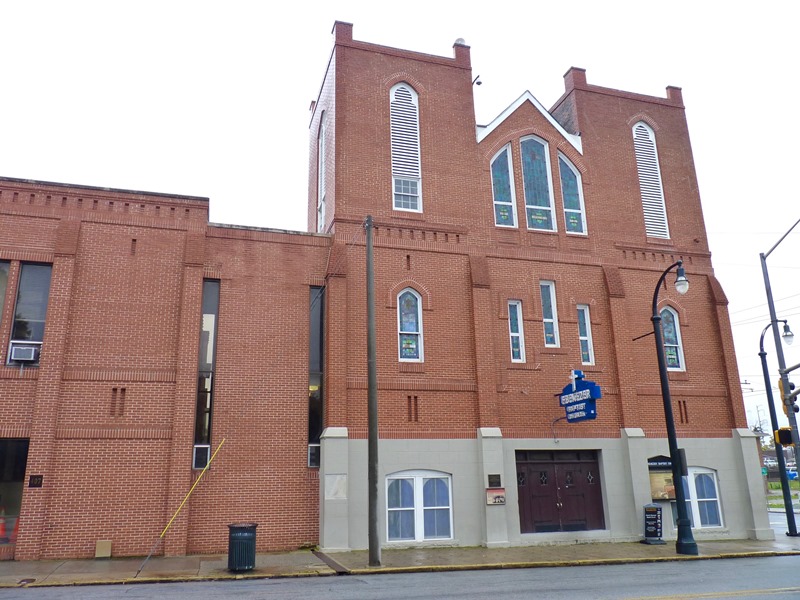
I found Manzanar a pertinent reminder of the fact that the country hasn’t always lived up to the promise of Lincoln’s “new birth of freedom.” I was reminded of this, too, when I was in Atlanta on my way to climb the highest mountain in Georgia, Brasstown Bald (1458m). I took the opportunity to visit the house where Martin Luther King, Jr., was born in 1929, as well as to see the Ebenezer Baptist Church, where King, his father, and his grandfather all preached in favour of desegregation, voting rights, and equal pay.
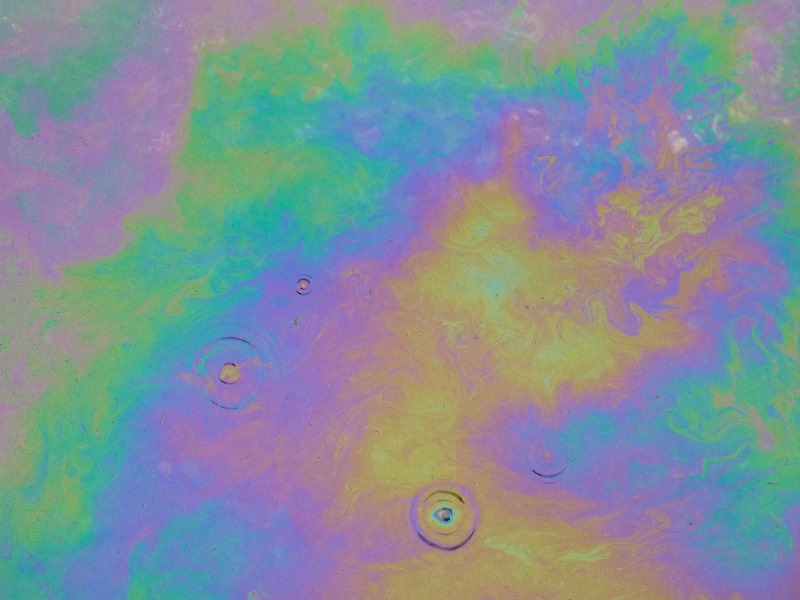
Martin Luther King, Jr., gave his “I have a dream” speech in Washington DC in August 1963. It is widely regarded as one of the finest pieces of oratory of the 20th Century. Listening to it 50 years later in Atlanta in 2015 reminded me how, the previous year, I’d listened to a recording of another famous American speech. A few days after Eric and I had climbed Mauna Kea (4205m), Hawaii’s highest mountain, we visited Pearl Harbour. To see oil on the surface of the Pacific ocean (still leaking from the wreck of the USS Arizona more than seventy years after it was bombed on December 7, 1941, an act that led to the loss of 1177 lives) was perhaps the most fascinating and moving thing I saw while I was in Hawaii.
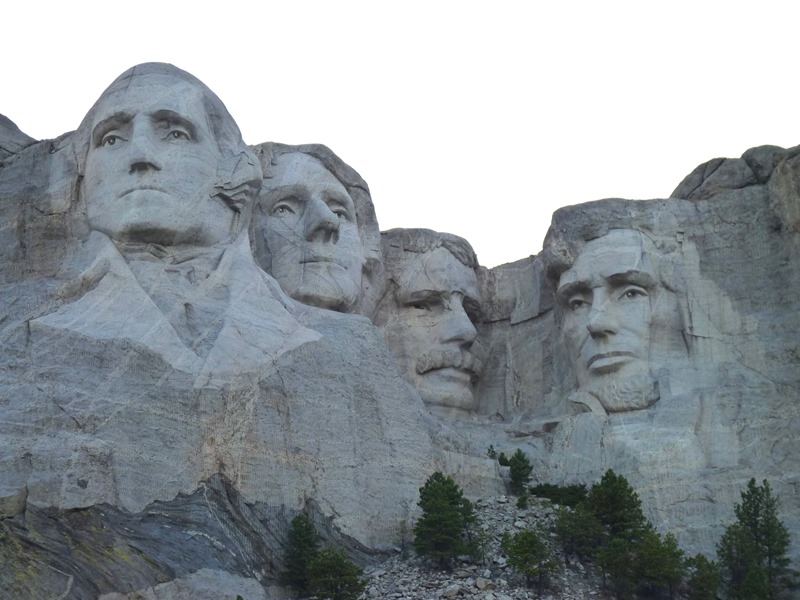
Watching a film of President Franklin D. Roosevelt delivering his famous speech to Congress the day after the surprise Japanese attack on Pearl Harbour – a speech in which Roosevelt declared it was “a date which will live in infamy” – appealed to me as a political scientist. FDR personally edited and deliberately changed the first draft of his speech to make it clearer and more powerful. How I wished more of my students had done that! In July 2012, while Eric (with whom I climbed ten of the hardest and highest state highpoints) and I were driving across northern Arizona, we made a sudden decision to turn off US interstate highway I-40 to see two geographic features about which we knew nothing: the painted desert and the Petrified Forest National Park. The desert was certainly well named. Red, blue, grey, and brown sandstones and soils stretched across the horizon, as far as the eye could see. Similarly, massive tree trunks on the desert floor looked just like forestry slash … except for the fact that the fallen trees were now solid stone. To conclude, let me mention some places I visited that were designed and created by humans. I knew about Mt Rushmore (which I called in to see on my way towards the highest peak in South Dakota), but the massive stone faces of four United States presidents – George Washington, Thomas Jefferson, Abraham Lincoln, and Theodore Roosevelt – are still extremely impressive. Each sculpture is 18 metres tall, and the foursome look down from the mountainside representing, respectively, the birth, expansion, preservation, and development of the United States.
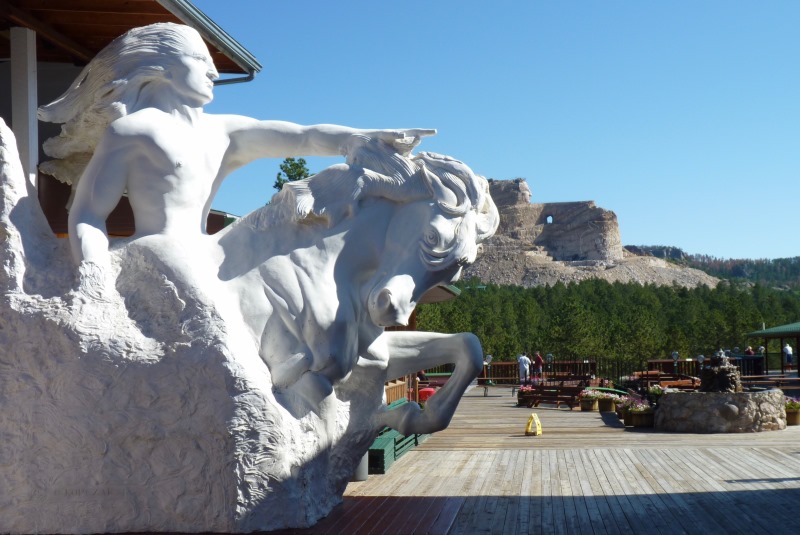
What I did not know, though, is that not far from Mt Rushmore there’s another colossal carving: the Crazy Horse memorial. Sculptor Korczak Ziolkowski started work on this Black Hills project – said to be the world’s largest sculpture – in 1948, and nearly 80 years later it is still far from finished. The carving is not intended to be an exact likeness of the Lakota chief but, rather, a memorial to the spirit of Crazy Horse, who famously said, “My lands are where my dead lie buried.” The memorial is a counterweight to the stories celebrated in stone on Mt Rushmore.
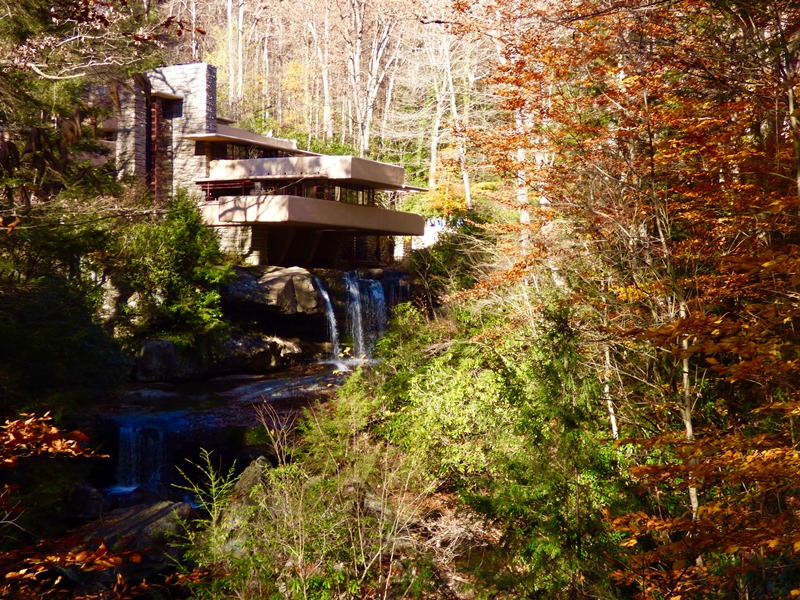
The United States Declaration of Independence was written in Pennsylvania and adopted on July 4, 1776. Then, eleven years later, the US Constitution was also written in Pennsylvania. Historically, it’s one of the most important states of the Union. As a result, I’ll end by recommending another attraction in Pennsylvania. Two days after standing on the summit of Mt Davis, I fulfilled a long-held goal. I went to see Frank Lloyd Wright’s architectural masterpiece, Fallingwater.
Nestled in woods in south-western Pennsylvania that were only a little past their autumnal best, it was easy to see why Fallingwater has been called “America’s most famous house”, “Frank Lloyd Wright’s most famous house”, and “the most famous house of the 20th century.” It’s an eye-catching building in an equally eye-catching setting, perched as it is on rocks above a waterfall. The United States of America is a captivating and complex country. It really is worth exploring from sea to shining sea. * * * * * * * * * * * * * * * * * * * * * * * * * * * * * * Nigel Roberts is an emeritus professor of political science at Te Herenga Waka / the Victoria University of Wellington. Detailed illustrated accounts of his travels can be found on his website (www.nigel-roberts.info). * * * * * This article was published in The Post, Wellington's daily paper, as well as in other newspapers in the Stuff stable, on Monday, August 25, 2025. (The headline The Post gave the article was "Peaks and Places: A Journey Across America".) * * * * * |
||