 |
NIGEL ROBERTS Northern Ireland: the last and smallest of the UK’s litter |
|
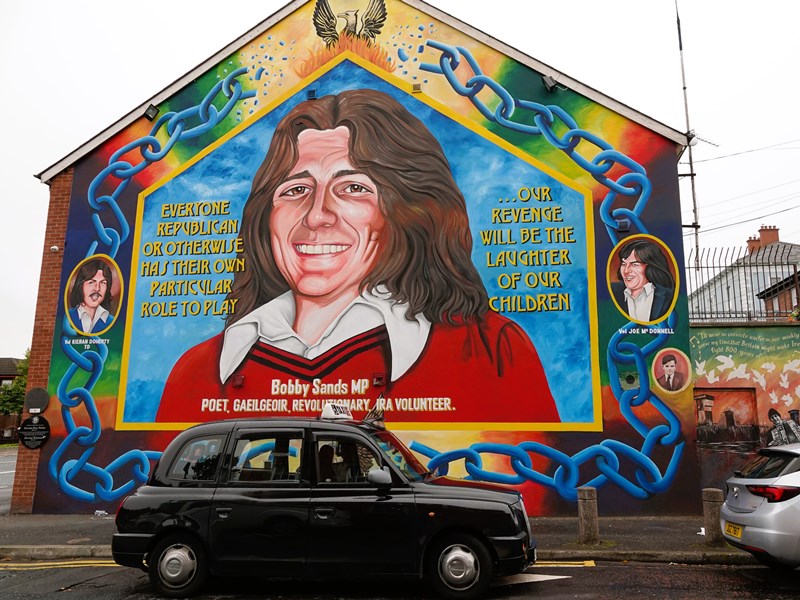
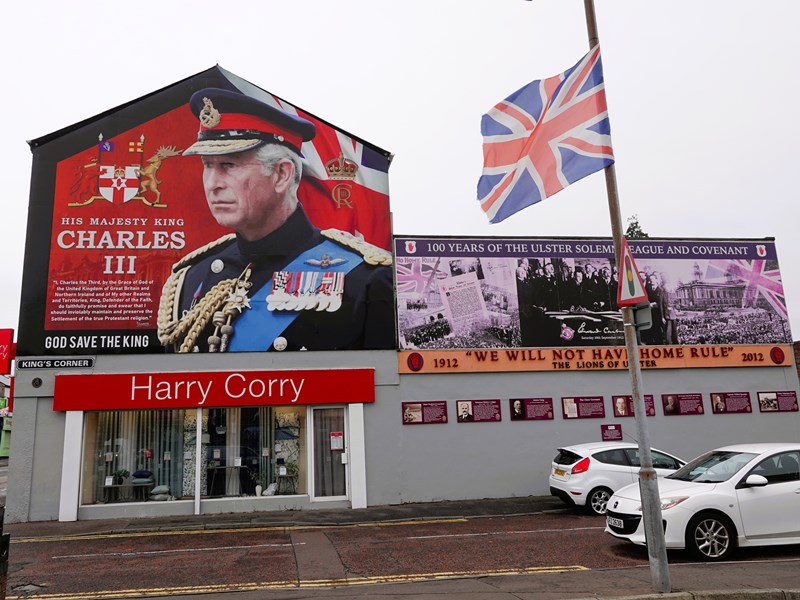
Northern Ireland is definitely the runt of the United Kingdom. It’s the last born and smallest of the UK’s litter. Edward I – king of England – conquered the Welsh during the 13th century, and in the mid-16th century Wales was subsumed by England. In 1707, the separate English and Scottish kingdoms merged to create the United Kingdom of Great Britain, and nearly one hundred years later Ireland formally became part of what was then known as the United Kingdom of Great Britain and Ireland. However, the desire for Irish independence grew throughout the 19th century and – after the abortive 1916 Easter Uprising and the 1919-21 Irish war of independence – Ireland finally became an independent country separate from Britain in 1922. Well, not quite all of Ireland did so. Six of the nine counties in Ulster – one of Ireland’s four provinces – voted against Irish independence and opted instead to remain a part of the UK. As a result, the kingdom’s name was changed yet again and for the past hundred years it has been known as the United Kingdom of Great Britain and Northern Ireland. I was born in the UK, and I’ve been to three of its four constituent parts – to England, to Scotland, and to Wales – on many occasions. As a result, I concluded it was high time I finally went to Northern Ireland, and last year I realised I could squeeze in a brief three-day trip there between visits to Ireland and to the Baltic states. Given very limited time, though, what would I do? Where would I go and what would I see? I boiled down my priorities to four main objectives. Like rust, the political scientist in me never sleeps, so two of my goals had a distinctly political flavour: I decided to see Belfast’s political murals and also to see Stormont, the home of the Northern Ireland parliament. The other two items on my hit list were more in the tourism mainstream: Belfast’s large new Titanic museum and the Giant’s Causeway. Black cabs have been called “a symbol of London and Britain”, so it was an appropriate reminder that I was indeed in the UK (and not in Ireland) when a driver in a typical black cab collected me from my Belfast hotel and took me on a fascinating fact-filled tour. For 30 desperate, dreadful, dangerous years from the late 1960s until the 1998 Good Friday agreement, Northern Ireland was synonymous with “The Troubles”, which were tantamount to a civil war between elements of the country’s Catholic and Protestant populations. Many buildings and homes throughout the province, but especially in Belfast and Londonderry, were adorned with murals trumpeting their owners’ political allegiances. Two streets in Belfast were at the centre of the strife: the Falls Road was (and still is) a Catholic stronghold, while Shankill Road was (and still is) a centre of Protestant loyalism.
Two large starkly contrasting murals stood out for me: one, on the Falls Road, commemorated Bobby Sands, an Irish republican who died in 1981 while on a hunger-strike in prison; the other was on Shankill Road. The whole top half of the side of a home-goods store featured a large portrait of His Majesty King Charles III faithfully promising and swearing to “maintain and preserve the settlement of the true Protestant religion.”
The divisions in Northern Ireland are no longer as deadly as they were 30 years ago, but they are still present. I was shocked to see massive steel gates separating key Catholic and Protestant suburbs. Not only do the gates exist, but they are closed every night between 8:30pm and 6:30am. Clearly, sectarian tensions in Northern Ireland still simmer below the surface and behind the gates.
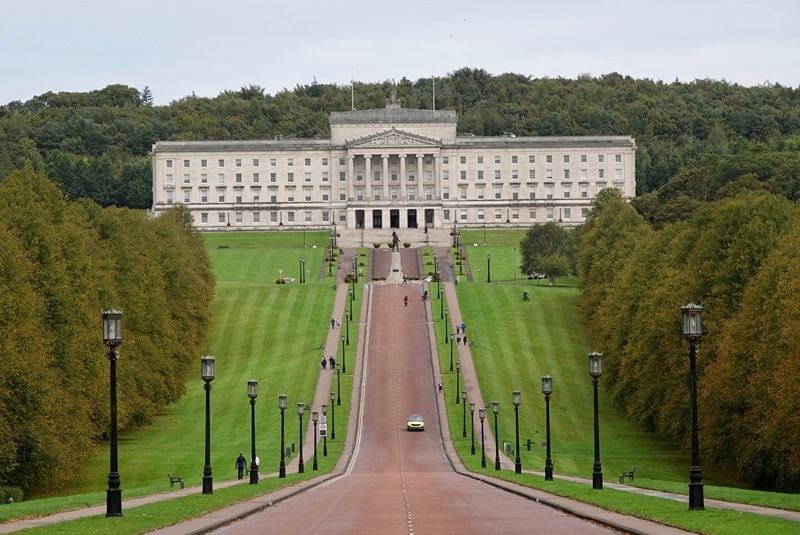
When Northern Ireland formally became part of the United Kingdom, it was allowed to have its own parliament (unlike Scotland and Wales, where another 70 years went by before they got their own parliaments). A handsome neo-classical building was constructed on the Stormont estate on the outskirts of Belfast. The parliament was originally bicameral, but – like the parliaments of Scotland, Wales, and New Zealand – it now has just one chamber.
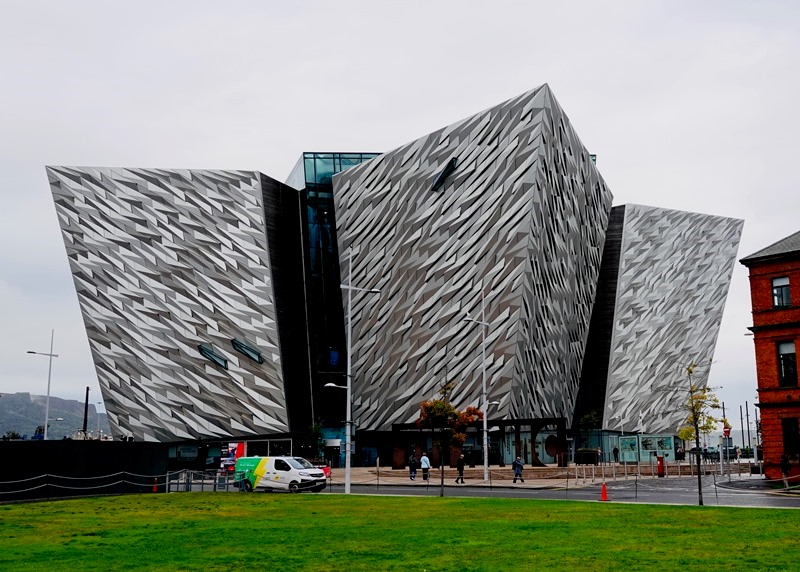
Much to my surprise, despite Northern Ireland’s deeply troubled history, the country’s parliament is one of the most open I’ve ever encountered anywhere outside the United States. I was allowed to wander around the building, including going into the current and former debating chambers and taking as many photographs as I wanted. During World War II, it was feared that the parliament’s large white building would be a sitting duck for German bombers, so it was painted – not with paint, but with a mixture of bitumen and cow dung! It took seven years to remove the camouflage, but remnants of it can still be seen in some of the building’s exterior corners and crannies. What is more, pub wits and cynics add that the manure inside the building is constantly being renewed. In the early 20th century, Belfast was the ship-building capital of the world. The city was especially known for its ocean liners, and the most famous ship built there was the Titanic. Construction started in March 1909, and 26 months later the massive four-funnelled ship slid down Harland and Wolff’s slipways. However – as is now universally known – the ship hit an iceberg and sank on its maiden voyage in April 1912. As part of an attempt to revitalise Northern Ireland after the depredations caused by “The Troubles”, a large museum – formally known as Titanic Belfast – has been built next to the city’s old shipyard slipways. It’s an imposing building, reminiscent of New Zealand’s new convention centres (particularly Christchurch’s Te Pai).
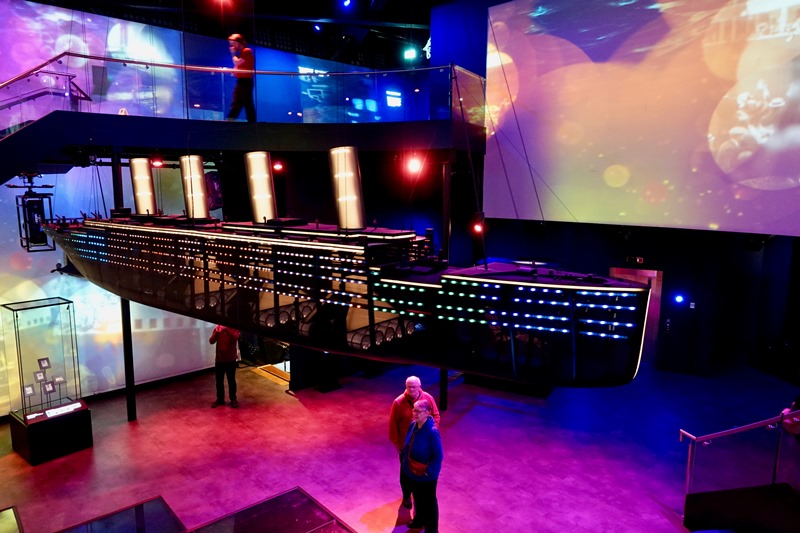
It’s possible to spend a fair few fascinating hours in the museum, and I certainly did.
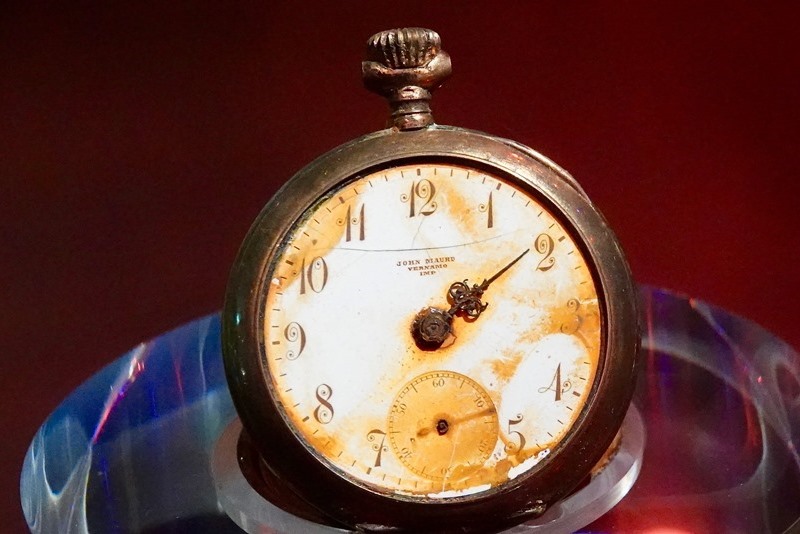
Two of the smaller displays struck a special chord for me. The first focussed on emigration. It pointed out that “in the first decade of the 20th century over eight million Europeans emigrated to North America,” some of whom were encouraged to “build your nest in western Canada.” In 1911, my paternal grandparents did just that, so I thanked my lucky stars they emigrated the year before the Titanic’s tragic voyage … otherwise you might not have been reading this article. My son, daughter-in-law and grandson live in Minneapolis, so the second display that stays in my mind is a personal pocket watch that belonged to Malcolm Joakim Johnson. He lived in Minneapolis and was returning home after visiting his native Sweden. Johnson died in the sinking, but his body was recovered – and so too was his watch. Its hands are frozen in time at 1:37am, the precise minute he fell into the frigid waters of the North Atlantic.
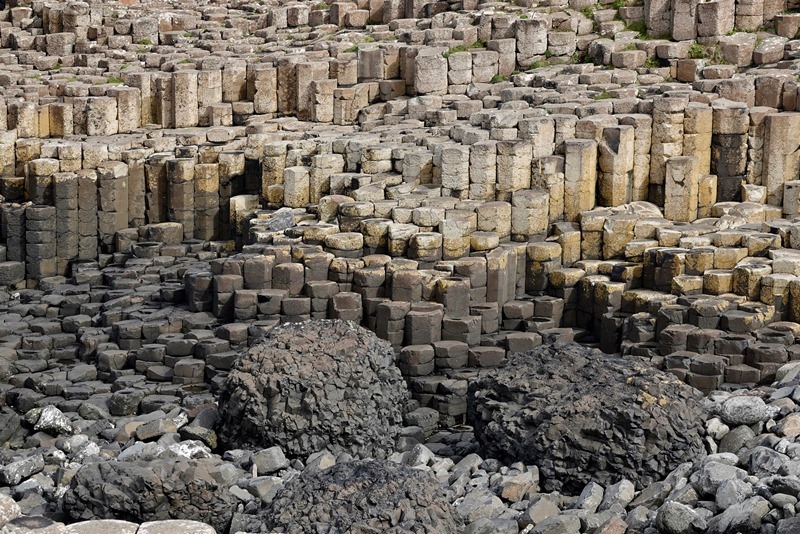
On my final full day in Northern Ireland, I went to see the Giant’s Causeway. It’s a UNESCO World Heritage site containing an estimated 40,000 hexagonal basalt stones formed as a result of volcanic eruptions some 60 million years ago when Europe was separating from North America.
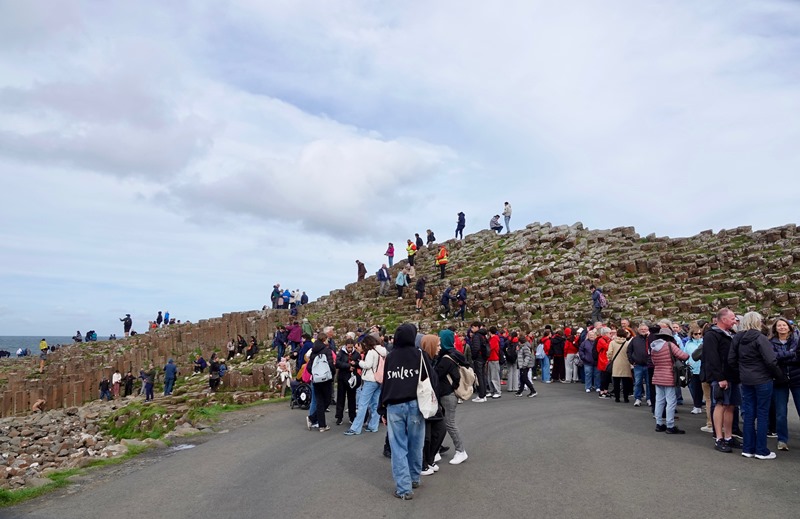
However, a colourful legend accounts for the geological phenomenon’s name. Finn McCool, an Irish giant, built a causeway across the Irish Sea to encourage his Scottish rival, Benandonner, to come and fight him. Following their confrontation, Benandonner ripped up the causeway as he fled back to Scotland, and all that was left of the causeway is what we can see today. But, as I somewhat sadly discovered, I couldn’t see all that’s left of the causeway because parts of it were covered by hoards of tourists. The Giant’s Causeway is the most popular visitor attraction in all of Ireland, North or South. I found myself wishing that Finn McCool could return to banish all those who ignore warnings against stepping on slippery columns and delicate vegetation.
Rather than get too grumpy, though, I consoled myself with the thought that occasionally it really is better to travel hopefully than to arrive – and that visiting the Giant’s Causeway was one of those occasions. * * * * * * * * * * * * * * * * * * * * * * * * * * * * * * Nigel Roberts is an emeritus professor of political science at Te Herenga Waka / the Victoria University of Wellington. Detailed illustrated accounts of his travels can be found on his website (www.nigel-roberts.info). * * * * * This article was published in The Post, Wellington's daily paper, as well as in other newspapers in the Stuff stable, on Monday, June 22, 2026. (The headline The Post gave the article was "More than a Causeway".) * * * * * |
||
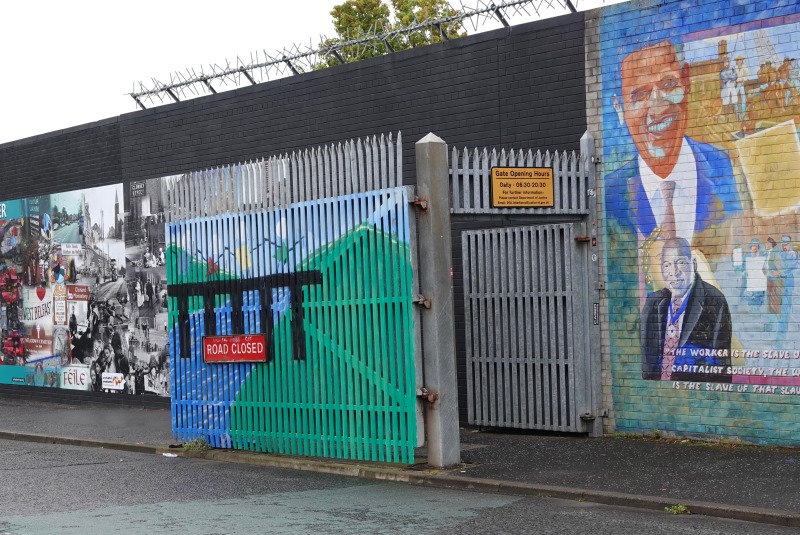 One of the gates that’s closed for 10 hours every evening to separate Catholic and Protestant communities in Belfast.